

Views: 0 Author: Site Editor Publish Time: 2026-06-22 Origin: Site
The physical access token is undergoing a profound transformation. We now see the smart card evolving into an integrated edge-computing device. It secures digital identities and protects corporate boundaries simultaneously. Enterprise leaders continuously re-evaluate their credentialing infrastructure today. They face expanding Zero Trust architectures. They tackle highly advanced fraud tactics daily. They must also manage complex hybrid work models seamlessly. Relying on outdated proximity badges leaves organizations exposed to unacceptable operational risks. Attackers actively exploit weak physical and logical entry points. We must look past vendor hype to examine actual technical capabilities. This guide explores which next-generation credentialing technologies warrant your attention. You will learn how to evaluate modern solutions systematically. We provide evidence-based strategies to help you navigate typical adoption complexities. You can upgrade your identity ecosystem effectively by following these evaluation dimensions.
Convergence is the standard: The future of the smart card lies in unified physical and logical access, bridging facility entry and network authentication.
Biometrics are leaving the device: On-card biometric matching reduces server-side data vulnerabilities but requires careful TCO (Total Cost of Ownership) evaluation.
Compliance drives adoption: Future-proofing requires strict adherence to FIDO2, ISO/IEC standards, and regional privacy mandates (e.g., GDPR).
Frictionless deployment is a myth: Upgrading smart card ecosystems involves hardware reader compatibility checks, user-privacy change management, and lifecycle provisioning complexities.
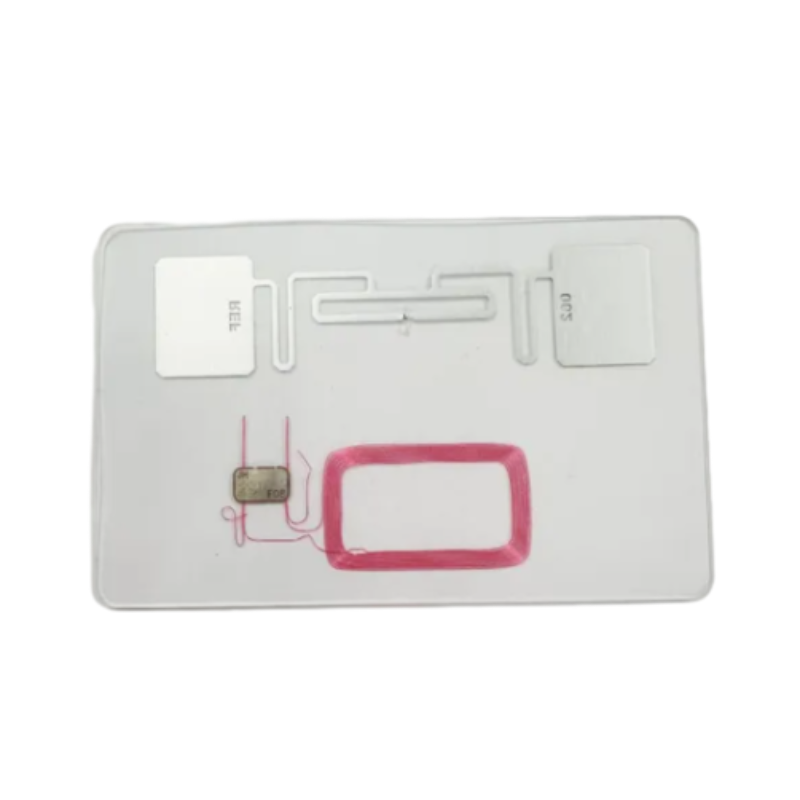
Older unencrypted RFID chips pose massive security risks. Basic proximity badges broadcast their facility codes openly. Attackers intercept these unencrypted signals easily. They deploy modern cloning devices from mere feet away. Threat actors also utilize relay attacks frequently. A relay attack boosts a legitimate card signal from a parking lot directly to a restricted door. Static PINs offer minimal protection against these sophisticated methods.
You must audit your current vulnerability baseline before procuring new solutions. Security teams should map precisely where outdated protocols expose internal networks. Identify which access points rely on low-frequency 125 kHz technologies. Determine how many employees still use simple magnetic stripes. Documenting these specific technical weaknesses helps you justify necessary infrastructure upgrades.
Issuing separate credentials creates massive operational drag. Employees often carry one physical badge for building access. They use a separate hardware token for network logins. Another dedicated card handles corporate expenses. We see immense administrative overhead stemming from this fragmentation. IT helpdesks constantly reset forgotten passwords. Human resources personnel replace lost physical badges daily. Siloed identity platforms consume valuable administrative hours.
You must quantify this administrative burden accurately. Calculate the weekly hours spent managing disconnected identity portals. Measure the productivity lost when employees cannot access critical systems simultaneously. Integrating these disparate functions into a single smart card streamlines daily operations. It removes internal bottlenecks and reduces frustrating user experiences.
| Identity Silo | Operational Burden | Security Vulnerability |
|---|---|---|
| Physical Access Only | High replacement frequency for lost plastic badges. | Prone to cloning and unauthorized physical hand-offs. |
| Network Authentication Token | Constant helpdesk tickets for desynced or lost tokens. | Risk of interception or credential stuffing if not bound to hardware. |
| Corporate Expense Card | Manual reconciliation and delayed transaction reviews. | Exposure to card-not-present fraud and delayed cancellation. |
Modern biometric credentials eliminate centralized data vulnerabilities entirely. Fingerprint sensors sit directly on the physical credential. The device draws temporary power from the contactless reader. The entire matching process happens internally. The fingerprint template never leaves the isolated secure element. We avoid centralized biometric database storage completely.
This architecture delivers a drastic reduction in unauthorized access. Attackers cannot steal what a centralized server never stores. It mitigates massive breach risks effectively. Organizations gain irrefutable proof of physical presence during authentication. You protect sensitive access points without compromising employee privacy.
Modern credentials act as robust hardware authenticators today. They enable entirely passwordless environments through asymmetric cryptography. You achieve genuine phishing-resistant Multi-Factor Authentication (MFA). The device generates unique cryptographic keys for every single session. Threat actors cannot reuse intercepted credentials.
This capability aligns perfectly with stringent cybersecurity insurance requirements. Underwriters demand robust hardware-bound authentication protocols. A modern smart card anchors your identity within a Zero Trust architecture securely. It ensures your network verifies identity continuously at every critical access boundary.
We increasingly utilize programmable credentials in corporate finance. Virtual-physical hybrid credit cards offer dynamic parameters. They shift workflows from reactive expense reporting to proactive spend governance. Finance teams set strict guardrails before transactions ever occur.
Programmable Limits: Issue daily or project-specific transaction ceilings automatically.
Merchant-Category Blocking: Restrict card usage strictly to approved vendor classifications.
Real-Time Reconciliation: Sync transaction data instantly with enterprise accounting software.
Instant Issuance: Deploy virtual versions immediately while physical cards ship.
3. Core Evaluation Dimensions for Future-Proofing
You should never pay for unused capabilities. Match specific technologies directly to actual business pain points. Do you need biometric authentication for all employees? Perhaps only high-clearance server room staff require such rigorous verification. Standard staff might only need FIDO2 capabilities for basic workstation logins.
Assess your exact operational needs thoroughly. Define the specific problem you want to solve first. Select features that address those exact security gaps. This targeted approach prevents over-engineering your credentialing infrastructure. It keeps deployments manageable and highly effective.
Evaluating underlying standards ensures baseline hardware resilience. You must demand cryptographic proof of hardware isolation. A reliable vendor will provide transparent certification documentation. Focus on these critical compliance frameworks:
EAL5+ or EAL6+ Certification: Guarantees rigorous testing of the secure element against physical tampering.
ISO/IEC 7816: Ensures integrated circuit interoperability across different reader ecosystems.
FIPS 140-3: Validates the strength of cryptographic modules for federal and enterprise use.
Privacy considerations matter greatly during evaluation. You must understand how the device handles Personally Identifiable Information (PII). Native decentralized architectures maintain GDPR and CCPA compliance inherently. They keep sensitive data firmly in the hands of the user.
Analyze the true scaling effort required for deployment. Factor in the issuing software complexity. Consider the integration requirements involving existing Identity and Access Management (IAM) directories. You must evaluate the lifecycle management burden across your global workforce.
Connecting a modern smart card to systems like Microsoft Entra ID or Okta demands careful planning. Evaluate whether the credential management system offers automated provisioning workflows. Understand the administrative resources required to issue, update, and manage thousands of secure devices simultaneously.
Acknowledge the deployment friction early in your planning phase. Will these next-generation upgrades require entirely new NFC readers? Many advanced credentials feature dual-interface designs. They communicate smoothly across legacy 125 kHz proximity readers and modern 13.56 MHz contactless terminals.
You must map your current physical infrastructure accurately. Survey existing door controllers and workstation USB peripherals. Upgrading every physical reader simultaneously disrupts daily operations severely. Phased hardware upgrades provide a smoother transition path. Seek credentials offering robust backwards compatibility to ease this process.
Global microchip shortages disrupt procurement timelines constantly. Vendor lock-in poses another significant operational threat. You must source credentials from manufacturers utilizing diverse supply chains. Avoid proprietary protocols tying you exclusively to one reader manufacturer forever.
Define your lifecycle workflows precisely. How do you handle initial enrollment securely? Establish strict revocation steps for terminated employees. Develop secure destruction processes for advanced edge-compute devices. You cannot simply throw cryptographic hardware into standard recycling bins. Implement documented protocols for rendering the internal secure elements permanently inoperable.
Prepare for internal pushback immediately upon announcing biometric rollouts. Employees frequently question corporate biometric data collection. You must communicate your technology choices transparently. Explain exactly how on-card biometrics protect their privacy better than legacy systems.
Show them the architecture directly. Emphasize the data never leaves their personal device. It never sits in a vulnerable cloud database. We find transparency dramatically reduces friction. Establish an internal FAQ document addressing surveillance concerns. User adoption improves significantly when employees understand the privacy-first nature of edge-computing devices.
Define a successful rollout clearly before initiating procurement. Do you want zero physical security breaches within 12 months? Perhaps you target a 90% reduction in helpdesk password reset tickets. You must quantify your primary objectives early.
Vague goals lead to stalled deployments. Establish clear operational metrics instead. Measure the average time required to onboard a new employee securely. Track the reduction in successful phishing simulations after deploying hardware authenticators. These concrete metrics help you evaluate vendor performance objectively during the selection phase.
Ask tough questions during the formal Request for Proposal (RFP) process. Demand practical demonstrations over marketing presentations. We developed a framework to help you navigate vendor capabilities critically. Use this logic to separate robust solutions from fragile prototypes.
| Evaluation Category | Critical Question for Vendor | Ideal Vendor Response |
|---|---|---|
| Sensor Reliability | What is the fallback mechanism if the on-card biometric sensor fails or gets damaged? | Provides a secure, IT-managed PIN fallback or temporary bypass protocol via the IAM dashboard. |
| Cryptographic Proof | Can you provide independent certification proving the isolation of your secure element? | Supplies official EAL6+ or FIPS 140-3 certification documents from recognized testing laboratories. |
| Reader Compatibility | Does your solution force us to rip-and-replace all existing building readers? | Offers customizable dual-frequency antennas supporting legacy RFID while migrating to high-frequency NFC. |
A phased rollout remains critical for enterprise success. You should never attempt a company-wide deployment initially. Start testing with a high-risk IT cohort. Alternatively, select a small executive group for the initial trial. Monitor their daily usage closely.
Gather practical feedback regarding physical durability and reader responsiveness. Refine your automated provisioning workflow based on this data. A structured PoC reveals hidden integration issues early. It allows your helpdesk to build accurate troubleshooting guides. You scale the deployment confidently only after validating the core infrastructure.
The credentialing landscape continues shifting rapidly toward integrated edge-computing. We examined how the modern smart card securely bridges physical facility entry and complex logical network access. It eliminates the severe vulnerabilities found in legacy proximity systems. Deploying FIDO2 capabilities and on-card biometric matching effectively neutralizes modern phishing and cloning attacks. It establishes a verifiable perimeter necessary for robust Zero Trust architectures. Organizations gain unprecedented oversight by integrating proactive corporate spend controls directly into daily credential usage.
You must move from evaluation to immediate action. Analyze your existing vulnerability baseline thoroughly this quarter. Establish strict feature-to-outcome mapping to avoid over-engineering your deployment. Focus heavily on hardware compatibility and decentralized privacy standards during your vendor selection process. Book a technical consultation with certified security architects today. Request a hands-on demonstration of enterprise-grade credentialing solutions. Modernizing your corporate security posture ensures your workforce remains secure, productive, and resilient against emerging threats.
A: Yes, they inherently support GDPR compliance through decentralized data storage. The fingerprint template remains encrypted strictly inside the internal secure element. It never transmits to external servers or central databases. Users maintain full control over their biometric data, which easily satisfies stringent consent and privacy regulations globally.
A: Absolutely. Modern dual-interface credentials bridge this gap seamlessly. They utilize traditional proximity antennas for physical door turnstiles. Simultaneously, they leverage PKI and FIDO2 protocols for logical network access. This convergence allows highly secure authentication across cloud applications and physical facilities using a single integrated device.
A: Expected durability ranges from three to five years under normal conditions. Advanced models utilize battery-free energy harvesting technology. They draw necessary power directly from NFC or contactless readers during active use. This eliminates internal battery degradation issues. Environmental wear usually dictates the ultimate replacement cycle.
A: They act as robust hardware authenticators enforcing continuous identity verification. They store hardware-bound cryptographic keys securely, preventing credential phishing and unauthorized signal cloning. Integrating them ensures every access request relies on verified, physically present identities. This hardware-backed verification forms the absolute bedrock of Zero Trust principles.


