

Views: 0 Author: Site Editor Publish Time: 2026-02-27 Origin: Site
Buyers who choose a Leather Surface RFID Access Control Card often focus on design and user experience, but one practical question always comes up early: what is the typical reading distance? This matters because access control performance affects daily convenience. If users must tap repeatedly or position the card very precisely every time, even a premium-looking card can create frustration.
For leather-surface RFID cards, it is important to understand that reading distance is not determined by appearance alone. The leather surface (whether genuine leather or PU leather) is mainly a decorative and tactile layer. In most access control applications, the practical reading distance is influenced more by the RFID system design, including frequency, chip, antenna design, reader configuration, installation, and the real environment where the card is used.
This article explains what “typical reading distance” really means, why it can vary from one project to another, and how buyers can evaluate a Leather Surface RFID Access Control Card more accurately before mass production.
In access control projects, users expect fast and smooth card reading. A card that reads reliably with a natural tap motion supports a better experience than one that requires repeated attempts. This is especially important in offices, hotels, clubs, or membership-based facilities where the card may be used many times every day.
Because a Leather Surface RFID Access Control Card is often chosen for premium presentation, buyers expect both appearance and performance to meet project standards. Reading distance becomes a key part of that expectation.
Project buyers often ask about reading distance to evaluate whether a card fits their system and user scenario. They may need to know whether the card works best in close-tap access use, whether reader positioning is strict, or whether real-world usage conditions may reduce practical distance.
This question is not only technical. It also affects:
user training requirements
replacement risk
complaint rates
deployment confidence
acceptance testing before rollout
Some buyers assume that a leather surface automatically changes RFID reading distance significantly. In most cases, this is not the main factor. The more accurate question is: how is the card engineered and tested as a complete product?
“Typical reading distance” is not the same as a “maximum distance” measured in ideal test conditions. A maximum value may be achieved in controlled testing, while real access control use includes user movement, card angle, reader placement, and environmental interference.
For procurement and deployment, practical consistency is usually more important than a single best-case number.
A card may perform differently in:
a bench test
a mounted door reader
a metal-framed entrance
a crowded badge holder
repeated daily usage conditions
This is why project-specific sample testing is essential when evaluating a Leather Surface RFID Access Control Card.
Many access systems are intentionally designed for controlled short-range operation to reduce unintended reads and improve access accuracy. In other words, a shorter practical range is not always a weakness—it may be part of secure and stable system design.
Reading distance is strongly influenced by the RFID frequency and the system architecture used by the access control setup. Different systems are designed for different reading behavior, and compatibility with the installed reader is the first requirement.
When buyers ask about “typical distance,” the answer must be tied to the actual system type, not just the card appearance.
The chip and antenna design play a major role in read performance. Even if two cards look identical on the outside, they may perform differently if their internal design or tuning differs. This is one reason why sample validation is more reliable than visual inspection alone.
Reader-side conditions are often as important as the card itself. Reading distance can change depending on:
reader power settings
reader antenna design
mounting position
installation surface
access lane layout
A card that performs well on one reader setup may feel different on another.
In daily use, users do not always present cards at the same angle or speed. Card orientation, approach angle, and tapping habits can all affect perceived reading distance. Sometimes what users describe as “short range” is actually a positioning issue rather than a card defect.
Nearby metal surfaces, stacked cards, badge holders, or electronic devices may reduce effective reading distance in real use. These factors are especially important when testing premium cards used in wallets or multi-card holders.
For a Leather Surface RFID Access Control Card, the RFID function comes from the internal chip-and-antenna structure. The leather surface is mainly an outer decorative layer that affects appearance and touch.
In a well-designed card, the surface material usually has limited direct impact on reading distance.
Whether the surface is genuine leather or PU leather, the direct effect on read distance is usually less important than frequency, chip, antenna, and reader setup. Buyers should avoid assuming that one surface type automatically provides better RFID performance.
Surface material can still affect performance indirectly if it changes:
card thickness consistency
lamination stability
adhesive uniformity
decorative finish placement
For example, unstable construction may create variation between samples, even when the same material type is used.
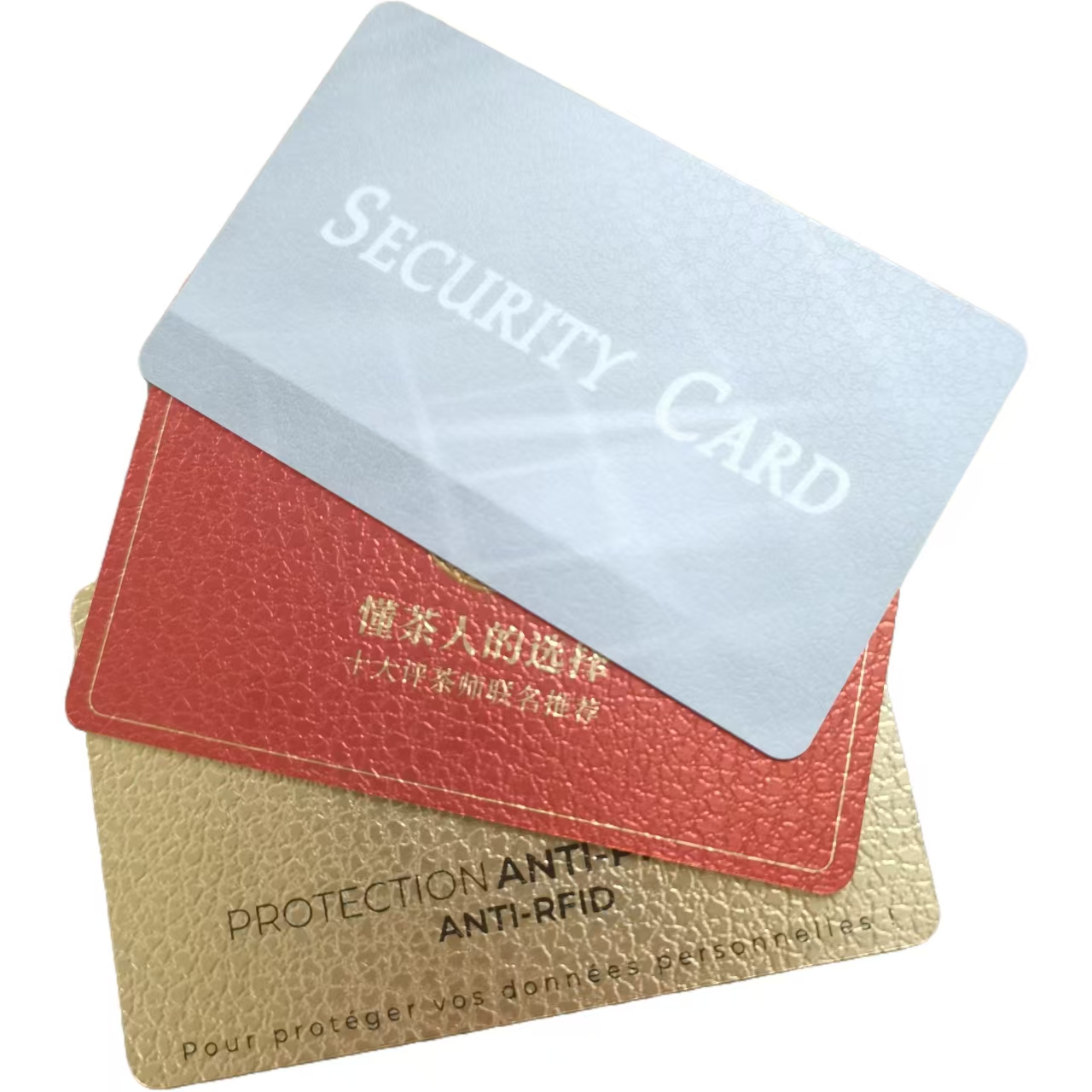
The best way to evaluate reading distance is to test the Leather Surface RFID Access Control Card on the same reader model used in the project. This gives a realistic view of performance.
A single sample may not represent batch consistency. Comparing multiple pieces helps buyers understand whether read response is stable across production.
Include realistic handling conditions such as:
wallet or badge holder use
repeated tapping
different user angles
actual installation environment
This is more useful than relying only on ideal test conditions.
Factor | Impact on Practical Reading Distance | What Buyers Should Check |
RFID frequency / system type | High | Confirm compatibility with installed access system |
Chip and antenna design | High | Validate sample read consistency |
Reader setup and installation | High | Test on actual reader and mounting condition |
Card thickness / structure | Medium to High | Confirm consistency across samples |
Leather surface type (genuine/PU) | Usually low (directly) | Focus on build quality, not label only |
Environment (metal, holder, stacked cards) | Medium to High | Test under real usage conditions |
Before bulk production, buyers should clearly confirm:
RFID system compatibility
card structure expectations
visual and functional sample approval criteria
performance validation method
This helps ensure the approved sample reflects the intended production result.
When reading distance is important, ask for a practical test method instead of only a single “maximum distance” statement. A useful approval process should describe:
reader model used
test conditions
card presentation method
pass/fail criteria
This reduces misunderstandings later.
Reader power, antenna design, installation position, and settings can all change practical reading distance, even when the card itself is the same.
Yes. Thickness and layer structure can affect coupling behavior in some systems, especially when the reader is tuned for a specific card construction.
Yes. Card stacking and surrounding materials may reduce effective reading distance or make reading less consistent in daily use.
It is better to request a clear test method and real-use sample validation, because a maximum value may reflect ideal conditions rather than actual access control performance.
For a Leather Surface RFID Access Control Card, the typical reading distance depends far more on the overall RFID system design and real-world usage conditions than on the leather surface itself. In most practical access control applications, factors such as frequency compatibility, chip and antenna design, reader setup and installation, card structure consistency, and environmental interference have a much greater influence on performance than whether the outer surface is genuine leather or PU leather. Because of this, buyers should avoid relying on general distance claims alone and instead focus on how the card performs within their actual project setup. The safest and most practical approach is to test multiple samples on the actual access control system, compare read response consistency under normal user behavior, and verify performance in real usage conditions before approving mass production.


