

Views: 0 Author: Site Editor Publish Time: 2026-09-30 Origin: Site
Choosing a card material may seem like a minor purchasing decision, but material selection affects printing, durability, personalization, card appearance, application suitability, and potentially the overall cost of a card program.
PVC and PETG are two materials buyers may encounter when sourcing plastic cards.
Although both can be used to manufacture identification and smart cards, their physical characteristics and processing requirements are not identical.
This guide compares PVC vs PETG cards from a practical procurement perspective and explains what you should evaluate before ordering.
PVC is widely used across identification, membership, access, loyalty, and other card applications.
PETG offers different material and processing characteristics that may make it suitable for particular card constructions.
Material alone does not determine card quality.
Printing process, lamination, chip integration, personalization, thickness, and finishing also affect performance.
Buyers should select materials according to the complete card application rather than focusing only on unit price.
PVC stands for polyvinyl chloride.
It is widely used in plastic card manufacturing because it can provide a smooth printable surface and can be processed into common card formats.
Typical applications include:
Membership cards
Loyalty cards
Employee ID cards
Access cards
Hotel cards
Promotional cards
RFID cards
PVC cards can also support numerous personalization options depending on the manufacturing process.
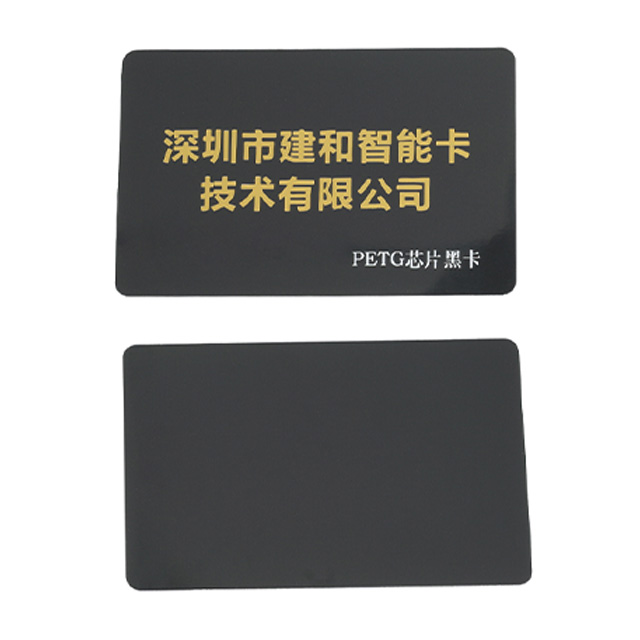
PETG stands for polyethylene terephthalate glycol-modified.
It is a thermoplastic material used in a variety of manufactured products, including certain card structures.
PETG can provide useful forming and processing characteristics and may be selected when a card manufacturer requires particular material properties.
| Factor | PVC Cards | PETG Cards |
|---|---|---|
| Common card applications | Very broad | Application dependent |
| Printing | Multiple processes available | Depends on construction/process |
| Smart chip integration | Available | Available with suitable construction |
| Surface finishing | Many options | Multiple options |
| Customization | Extensive | Extensive |
| Cost | Depends on specification | Depends on specification |
| Best choice | General-purpose card projects | Projects requiring PETG characteristics |
The exact performance of either material varies according to formulation, construction, manufacturing process, and intended application.
Card buyers frequently focus on artwork before considering whether their design matches the manufacturing process.
Both material selection and printing technology influence the final appearance.
Depending on the card, manufacturers may offer:
Offset printing
Screen printing
Digital printing
Spot colors
Metallic effects
Signature panels
QR codes
Barcodes
Serial numbers
Before production, confirm artwork requirements with the manufacturer.
Material choice becomes more complex when the card contains electronics.
A smart card may incorporate:
Contact IC module
RFID/NFC chip
Antenna
Magnetic stripe
Multiple technologies
The card body must protect these components while maintaining suitable dimensions and surface quality.
Therefore, buyers sourcing RFID or smart cards should evaluate the entire card construction rather than specifying only “PVC” or “PETG.”
Durability depends on more than the base material.
Factors include:
Card thickness
Lamination
Overlay
Printing technology
Surface finish
Usage frequency
Storage conditions
Exposure to heat
Mechanical bending
A frequently used employee access card has different durability requirements from a short-term promotional card.
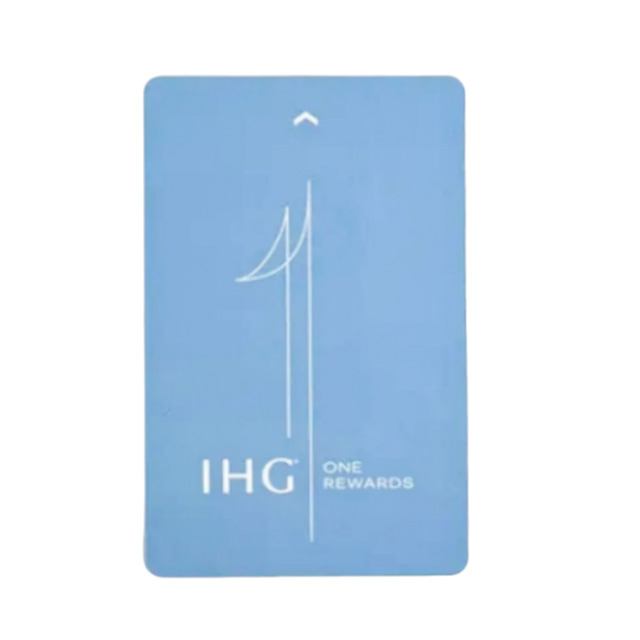
Start by defining exactly how the card will be used.
Is it a hotel key card, employee badge, membership card, access credential, loyalty card, or RFID identification card?
A card used for several days does not require the same construction as one expected to remain in service for years.
If the card requires a chip, tell the manufacturer:
Chip model
Frequency
Memory requirements
Reader environment
Encoding requirements
Determine whether you require:
Variable names
Photos
Numbers
Barcodes
QR codes
UID printing
Magnetic stripes
For large projects, physical samples are more useful than selecting materials purely from specifications.
The first mistake is assuming that one material is universally “better.”
There is no single card material that is ideal for every application.
Another mistake is comparing quotations without comparing specifications.
Two cards may look identical in a quotation but differ in:
Thickness
Chip
Printing
Overlay
Surface treatment
Personalization
Packaging
Always compare like-for-like specifications.
For faster and more accurate quotations, provide:
Card dimensions
Required thickness
Card material
Quantity
Artwork
Printing requirements
Chip type if applicable
Magnetic stripe requirements
Personalization requirements
Surface finish
Packaging requirements
Intended application
If you are unsure about the material, describe the application first and allow the manufacturer to recommend suitable options.
PVC and PETG can both be used in card manufacturing, but material selection should not be separated from the overall card design.
For most buyers, the better purchasing process is to define the application, expected service life, printing requirements, electronic components, personalization, and operating environment first.
A card manufacturer can then recommend an appropriate construction.
For large-volume projects, request physical samples and perform compatibility tests before approving mass production.
They are made from different thermoplastic materials and therefore have different processing and physical characteristics. Actual card performance also depends heavily on card construction and manufacturing.
PETG can be incorporated into compatible smart-card constructions. The final design must be matched to the RFID chip, antenna, lamination process, and reader requirements.
Yes. PVC is widely used for RFID, NFC, access-control, membership, hotel, and identification cards.
Pricing depends on material specification, card construction, quantity, printing, chip type, personalization, and finishing. Buyers should request quotations based on identical specifications.
For large orders or smart-card projects, sample testing is strongly recommended.


