

Views: 0 Author: Site Editor Publish Time: 2026-03-04 Origin: Site
Choosing the right credential for an access control project is not always simple. Buyers often see listings labeled “NFC keyfob,” “RFID keyfob,” or “programmable access keyfob,” and these terms may seem interchangeable, but they are related—not identical. A Programmable NFC Access Control Keyfob belongs to the broader RFID family, yet it often comes with different expectations for communication behavior, programmability, smartphone interaction, and project flexibility. NFC is commonly treated as a subset of RFID and is typically used for short-range, tap-based interactions. By contrast, a “standard RFID access keyfob” is a broader category that may involve different frequencies, chip types, and access technologies depending on the system. That is why compatibility—not just the product name—is the key factor before ordering. This article explains the practical differences between a Programmable NFC Access Control Keyfob and a standard RFID access keyfob, focusing on procurement decisions, deployment risk, and real access control use.
One reason buyers compare these products is simple: the labels are often inconsistent. Some sellers emphasize “NFC,” while others use “RFID” as a general category term. Since NFC is part of the RFID family, both labels may appear in similar product descriptions.
This creates confusion when a buyer is trying to replace an existing credential, expand a system, or evaluate a new project. A product may look similar in shape and purpose, but still differ in compatibility and functionality.
In access control, a keyfob that looks correct but does not match the reader system can lead to delays, extra testing, and rework. Buyers need to understand the difference early because it affects:
reader compatibility
programming expectations
deployment speed
user convenience
sample approval requirements
This is especially important for projects that plan bulk ordering or pre-encoding before delivery.
Both product types are used in scenarios such as:
office access
apartment entry
hotel and hospitality credentials
membership access
attendance systems
Even when the use scenario looks similar, the technical requirements behind the system may be very different. That is why “keyfob type” must be matched to the actual access infrastructure.
A Programmable NFC Access Control Keyfob is an RFID-based credential that uses NFC-related technology expectations, usually in short-range tap-style interactions. NFC is commonly defined as a specialized subset of RFID, rather than a completely separate technology.
This matters because a buyer may assume “NFC” means universal compatibility with all RFID systems, which is not true. Being in the RFID family does not guarantee cross-system compatibility.
In product listings, “programmable” usually refers to the ability to write or encode certain data under supported conditions. However, it does not automatically mean:
universal reconfiguration for any system
compatibility with all access readers
support for encrypted or proprietary systems
unrestricted UID modification
The actual programming scope depends on the chip type, system design, and access control requirements. Buyers should treat “programmable” as a feature that requires clarification, not as a universal guarantee.
Buyers often choose a Programmable NFC Access Control Keyfob because they expect more flexibility, such as:
writable data in supported applications
project-specific encoding workflows
possible interaction with NFC-capable devices (where supported)
easier credential handling in some deployment scenarios
These benefits can be real, but only when the keyfob matches the target system.
A “standard RFID access keyfob” is usually a general term for a keyfob used in access control systems. It often emphasizes the credential’s practical purpose—door entry or user identification—rather than advanced programmability or smartphone interaction.
The challenge is that “standard RFID” can refer to multiple technologies and frequencies, depending on the installed system.
When buyers request a standard RFID keyfob, they often prioritize:
simple and reliable door entry
compatibility with an existing reader
easy replacement of lost credentials
cost efficiency for larger volumes
In many projects, that is exactly the right choice. A standard RFID keyfob can be the most practical solution when the system is already defined and the credential role is straightforward.
The word “standard” may sound simple, but it can be misleading. A standard RFID keyfob for one access system may not work in another system with different frequency, protocol, or security requirements. This is why buyers should always confirm compatibility instead of relying on category names alone.
The biggest conceptual difference is that a Programmable NFC Access Control Keyfob is usually positioned as a more specific type of RFID credential, while a standard RFID access keyfob is a broader category label.
In procurement terms, “NFC” often signals:
short-range tap behavior
possible data interaction expectations
potential smartphone-related use cases (where supported)
“Standard RFID” often signals:
general access credential function
existing system compatibility focus
simpler replacement use
NFC is often associated with more interactive use cases than many basic access keyfobs, including scenarios involving device-to-tag interaction under supported conditions. NFC is also commonly described as supporting two-way communication behaviors in broader NFC applications, while many access credentials are used in a more one-way identification pattern.
That said, buyers should remember that access control use may still be limited by the reader system, even when the credential itself is marketed as programmable.
A standard RFID keyfob may be sold mainly as a credential for identification and access, while a programmable NFC keyfob is more likely to be marketed around writable/rewritable use cases.
However, programmability is not a replacement for compatibility. The key question is always: programmable for what system, and under what conditions?
One practical difference buyers often care about is whether the keyfob can be read or interacted with by NFC-capable phones in certain workflows. NFC-related products are more likely to be evaluated for this possibility, but actual support depends on chip type, app support, permissions, and system design.
So, this is a potential advantage—not a guaranteed one.
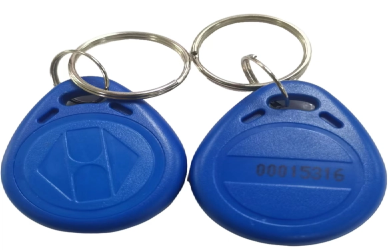
This is one of the most common misunderstandings. A Programmable NFC Access Control Keyfob can be programmable and still fail to work with a specific access reader if the system requirements do not match.
Programmability describes a capability range. Compatibility describes whether it works in your actual system. The second question is always more important in deployment.
Even within RFID and NFC-related products, compatibility can depend on:
frequency category
protocol expectations
chip family
reader configuration
system security design
If a project uses encrypted or proprietary credential requirements, generic “programmable” products may not be suitable without verification.
Before bulk ordering, buyers should test samples on the actual access control system and confirm:
read behavior
programming workflow (if needed)
credential recognition consistency
project-specific acceptance criteria
This reduces deployment risk and avoids costly procurement mistakes.
The first step is always to confirm what your access control system supports. If the system requirements are fixed, that answer will narrow your options quickly.
A Programmable NFC Access Control Keyfob is a better fit when your project specifically needs NFC-related functionality or supported programming flexibility. A standard RFID access keyfob may be the better choice when the goal is straightforward compatibility and efficient deployment.
More flexibility can be useful, but it can also increase testing needs. If your project is time-sensitive or large-scale, a simpler credential path may reduce risk. If your project needs custom workflows or future flexibility, a programmable NFC option may offer advantages—provided compatibility is verified first.
Before placing a bulk order, confirm:
exact reader/system compatibility
expected credential behavior
programming/encoding scope
labeling or delivery requirements
Clear documentation helps prevent mismatched expectations.
A good approval process should include multiple samples and real-world tests, not only visual inspection. Confirm both function and consistency before moving to mass production.
In some projects, yes, if the chip type and system design support both functions. Buyers should confirm how data is allocated and whether the access credential use is protected from unintended changes.
Because NFC is part of the RFID technology family, sellers may use different labels based on marketing focus, target users, or the specific feature they want to highlight.
No. Older systems may use different frequencies or protocols, so a programmable NFC keyfob may not be compatible unless the existing reader infrastructure supports it.
Request compatibility details, chip/frequency information, programming scope, sample test method, and clear approval criteria for function, labeling, and delivery consistency.
A Programmable NFC Access Control Keyfob and a standard RFID access keyfob may look similar, but they differ in positioning, expected functionality, and deployment considerations. A programmable NFC option can offer added flexibility in supported scenarios, while a standard RFID keyfob may be more practical for straightforward access credential replacement. In either case, the deciding factor is not the product label—it is verified compatibility with the actual access control system, supported programming scope, and successful sample testing before bulk deployment.


