

Views: 0 Author: Site Editor Publish Time: 2026-06-22 Origin: Site
Upgrading physical access control demands strict attention. Modifying corporate payment systems requires similar focus. Evolving identity frameworks means moving beyond legacy magnetic stripes. The transition to a modern infrastructure forces IT leaders to evaluate distinct trade-offs. You must balance organizational resources against strict cryptographic security. User friction also plays a vital role. Before committing to hardware vendors, analyze your operational realities. Software issuance platforms also require careful review. Organizations must understand the three primary architectures available today. Selecting the right smart card dictates daily operational flow. We will guide you through this critical decision process. You will learn about key technical specifications. We cover security applications and necessary integration strategies.
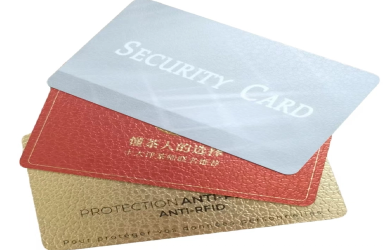
Contact Smart Cards require physical insertion, offering the highest baseline security and compliance (e.g., FIPS) for logical access, but suffer from mechanical wear.
Contactless Smart Cards utilize RFID/NFC for tap-and-go convenience, making them ideal for high-throughput physical access, though they require strict encryption to prevent interception.
Dual-Interface Smart Cards house a single microprocessor accessible via both contact and contactless methods, providing maximum flexibility for combined physical/logical access at a higher per-unit cost.
Procurement reality: The true cost of deployment is rarely the card itself; it lies in reader infrastructure upgrades, issuance software compatibility, and lifecycle management.
Choosing hardware forms the foundation of your entire identity and access management (IAM) framework. Financial processing architectures depend entirely on these physical tokens. Procurement failure points happen frequently across large organizations. Many operators suffer from severe over-provisioning. They deploy high-end cryptographic tokens for simple office access. This drains resources unnecessarily while overcomplicating simple daily routines. Conversely, dangerous under-provisioning occurs far too often. Decision-makers deploy simple memory-only solutions for sensitive IT network access. This creates massive security vulnerabilities.
Modern frameworks like Zero Trust mandate strict identity verification at every endpoint. A compromised physical credential breaches this trust immediately. You face a fundamental operational trade-off. Evaluators must measure the daily friction of physical token insertion. Compare this against the known security vulnerabilities of wireless transmission. Every organization possesses unique risk tolerances. Finding the exact middle ground ensures long-term operational success. Strong policies help guide these vital selections. Balancing these extremes requires careful mapping of user roles to specific facility zones.
Engineers define these items clearly. They require a direct physical connection against a reader's electrical contacts. The ISO/IEC 7816 standard strictly governs their design. It also outlines the necessary communication protocols. We must distinguish between microprocessor and memory components. Microprocessors provide the computing power necessary for dynamic authentication. They perform complex mathematical calculations directly on the chip. Memory chips only offer static data storage. Highly secure environments demand microprocessor capabilities to prevent unauthorized access.
Primary use cases involve strict regulatory environments. Government identification programs heavily utilize them globally. Personal Identity Verification (PIV) programs rely on this architecture. Common Access Card (CAC) deployments also require direct physical contacts. Securing logical access to highly sensitive enterprise networks demands these tools. Legacy EMV financial transactions also use them to secure global commerce.
Implementation brings distinct operational realities. The system remains completely air-gapped against remote skimming attacks. The reader supplies reliable electrical power directly during the handshake. You can achieve high-level EAL certifications efficiently. Meeting FIPS compliance becomes much easier under these parameters. However, friction and risks exist. Repeated daily insertions cause significant mechanical wear. Physical friction generates micro-abrasions. Over thousands of insertions, these micro-abrasions damage the gold plating.
Dust and debris accumulate inside the physical reader slots. This accumulation prevents proper electrical contact. IT teams must deploy regular cleaning schedules using specialized abrasive cleaning tools. This maintenance overhead adds significant operational friction. The slower throughput also creates bottlenecks during peak login hours. Users wait precious seconds for the cryptographic handshake to complete.
These dynamic tools communicate completely via radio frequencies. They contain a precise internal antenna connected to a secure chip. The ISO/IEC 14443 standard typically governs these specific RFID and NFC interactions. Users benefit greatly from tap-and-go convenience. You never insert the token into a mechanical slot.
Primary use cases span massive high-traffic environments. University campuses use them for comprehensive student services. Public transit systems process millions of daily fares securely. Corporate physical access control systems (PACS) rely on them for rapid building entry. Point-of-sale systems process retail payments instantly without delays.
Implementation offers incredibly strong advantages. Mechanical wear drops to near zero. Rapid throughput keeps large crowds moving quickly through lobby turnstiles. The infrastructure scales seamlessly for massive global workforces. You eliminate broken reader pins completely. The lack of moving parts reduces physical maintenance drastically.
Significant risks remain prevalent despite these advantages. Attackers actively exploit relay vulnerabilities. Signal boosting devices can capture a credential's broadcast from feet away. Attackers hide these devices in backpacks. They relay the signal to an accomplice standing near a secure door. Remote skimming techniques threaten unencrypted wireless transmissions. Legacy protocols present severe institutional weaknesses. Unencrypted MIFARE Classic deployments expose facilities to simple cloning attacks. You must deploy advanced cryptographic protocols to secure physical environments. Standards like DESFire EV2 or EV3 meet strict enterprise security requirements. Modern AES encryption utilizes dynamic keys. Each transaction generates a unique encrypted signature. Even if intercepted, the captured data remains utterly useless for future access attempts.
This hybrid standard offers maximum deployment flexibility. A single credential houses exactly one integrated circuit. This powerful microprocessor connects to a surface contact plate. It also connects simultaneously to an internal copper antenna. You gain two distinct communication pathways from one unified device. This allows administrators to consolidate multiple disparate systems.
Modern corporate credit cards heavily utilize this specific architecture. FinTech organizations issue them for seamless global transactions. Converged enterprise badges represent another massive operational use case. Employees use one single item for building entry. They use the exact same item for workstation login. National identity programs also favor this comprehensive unified approach for citizens.
Bridging legacy and modern infrastructure represents the strongest advantage. You can execute highly phased infrastructure upgrades. Keep legacy contact readers active for PC login stations. Simultaneously upgrade main facility doors to modern tap-and-go sensors. You avoid ripping out and replacing every reader simultaneously. This phased approach stabilizes resource allocation over multiple quarters.
Some distinct deployment hurdles exist. The complex manufacturing process introduces potential failure points. Factories laminate multiple layers of PVC or PET materials. They embed a thin wire antenna deeply within these layers. Connecting this embedded antenna to the microscopic chip module presents severe engineering challenges. Conductive bumps or inductive coupling techniques bridge this gap. Poorly sourced materials often cause antenna-to-chip connection failures. The internal bonds break under physical bending stress. The token immediately loses all wireless capabilities. Users must revert to physical insertion exclusively. You must vet hardware manufacturers rigorously. Ensure they utilize durable bonding techniques for maximum longevity.
Aligning physical features to organizational outcomes requires systematic evaluation. We categorize this evaluation into three critical dimensions. Evaluators must address each dimension before engaging suppliers.
Security and Compliance Matrix: Regulatory environments dictate baseline technical requirements. Frameworks like HIPAA, GDPR, and FedRAMP matter immensely. They often demand strict multi-factor authentication (MFA). You must anchor this MFA to a cryptographic contact chip. This ensures maximum regulatory compliance. Failing to meet these standards invites severe penalties.
Infrastructure Compatibility: Assess your current reader fleet thoroughly. Upgrading thousands of physical door readers is a massive undertaking. The reader replacement project often eclipses other project elements. You must audit all existing endpoints carefully. Identify which legacy readers require immediate replacement.
Data Capacity and Applet Support: Evaluate multiple application requirements deeply. Sometimes you need a flexible Java Card. It can run distinct applets simultaneously. One applet might handle local transit fares safely. Another applet manages secure IT network authentication. The chip must possess sufficient memory to house these separate applets securely.
You can review this comparison matrix to guide your architectural strategy:
| Requirement Type | Recommended Architecture | Primary Benefit | Operational Drawback |
|---|---|---|---|
| Strict Regulatory Compliance | Contact Only | Air-gapped logical security | High physical wear and friction |
| High-Traffic Physical Entry | Contactless | Rapid user throughput | Requires advanced AES encryption |
| Converged IT & Physical Access | Dual-Interface | Maximum deployment flexibility | Complex manufacturing requirements |
Successful deployment requires actively avoiding common architectural pitfalls. Vendor lock-in remains a highly persistent threat. Buyers must specify open standards during all procurement phases. Demand OSDP protocols for physical door readers. Legacy Wiegand protocols offer zero encryption and fail modern security audits. Require standard ISO formats for all smart card credentials. Avoid proprietary vendor encryptions at all costs. Proprietary systems severely limit future hardware choices. They trap you within one single supplier ecosystem.
Issuance and lifecycle management require robust software backing. Factor in the technical capabilities of your Card Management System (CMS). You need highly clear workflows for daily operational tasks. Your CMS dictates your actual operational efficiency. Modern CMS platforms integrate directly with central HR databases. They sync seamlessly with Active Directory.
Establish immediate revocation protocols for lost items.
Define secure re-issuance workflows for remote employees.
Implement strict temporary access guidelines for facility visitors.
Automate certificate renewals before unexpected expiration occurs.
Take concrete next steps immediately. Conduct a comprehensive site audit of all existing readers. Document every active hardware model. Run a targeted pilot program first. Deploy dual-interface models for a small, high-security department. Evaluate the complete hardware lifecycle over a five-year span. Monitor user feedback closely during this crucial pilot phase. Adjust your final rollout strategy based on empirical field data. Let data guide your overarching physical access implementation strategy.
Contact options provide uncompromising logical security for sensitive operations. Contactless variations strongly optimize physical throughput for busy environments. Dual-interface models offer the necessary convergence for modern scalable enterprises. Base your vital procurement decisions on existing reader infrastructure. Align choices directly with the compliance mandates of the data being accessed. Do not focus solely on base hardware specifications.
Take decisive action today. Schedule a technical consultation with an infrastructure specialist. Request a comprehensive audit of your current physical and logical readers. Download a detailed specification datasheet. This helps guide your next major deployment effectively and securely.
A: Memory cards only store static data and offer minimal security. They function similarly to a basic USB drive. Microprocessor options act like miniature computers. They execute dynamic cryptographic algorithms. These algorithms authenticate identities securely and process complex operations directly on the chip without exposing the raw data.
A: Legacy proximity models operating at 125 kHz clone easily. Early contactless versions also exhibit vulnerabilities. Modern variations use AES cryptography and secure microprocessors. When configured correctly, these advanced models resist cloning and skimming attacks effectively. Dynamic keys ensure intercepted data remains useless.
A: No. Magnetic stripe items are strictly static data storage devices. They lack processing capabilities entirely. They offer zero cryptographic security, making them highly susceptible to skimming. They are unsuitable for modern enterprise security, logical access control, or secure financial environments.
A: The physical PVC or PET body typically lasts three to five years under normal conditions. Internal chips share a similar lifespan. However, models requiring physical insertion may fail sooner. Continuous mechanical scratching on the contact plate accelerates degradation over time compared to contactless alternatives.


