

Views: 0 Author: Site Editor Publish Time: 2026-09-30 Origin: Site
Managing high-volume events with legacy ticketing and cash-based vendors creates predictable bottlenecks. Slow gate throughput, revenue shrinkage, and compromised security plague organizers. For event directors and venue operators, transitioning to RFID (Radio Frequency Identification) technology shifts the infrastructure. It moves operations from passive entry checking to an active, data-rich operational ecosystem.
You must understand the underlying technology to maximize your operational efficiency. Moving away from paper tickets transforms your venue into a highly connected grid. This guide breaks down how these wearables solve specific event management friction points. You will discover the hardware and software criteria required for successful deployment. We also explore the implementation realities you must consider before selecting a vendor. By the end of this article, you will know exactly how to evaluate potential technology partners and secure your digital perimeter.
Faster Throughput: RFID scanning reduces entry times to milliseconds, practically eliminating gate bottlenecks compared to barcode scanning.
Increased Per-Capita Spend: Cashless payment integration removes purchase friction, historically increasing attendee spending by 15% to 30%.
Absolute Fraud Prevention: Encrypted RFID chips cannot be duplicated, effectively eliminating counterfeit ticketing and unauthorized VIP access.
Deployment Requires Infrastructure: Successful ROI relies heavily on offline-capable hardware, robust vendor APIs, and pre-event fulfillment strategies.
Organizers often underestimate the hidden costs embedded in traditional paper and barcode ticketing. Relying on outdated methods creates a cascading effect of operational failures. These failures frustrate attendees and drain potential profits.
Barcode scanners require a direct line-of-sight to function. Staff must often adjust the screen brightness on attendee smartphones. They troubleshoot torn paper tickets manually. This friction severely reduces per-minute scan rates. Lines grow longer, and attendee satisfaction plummets before they even enter the venue. Security teams experience rapid fatigue when forced to manually verify thousands of visual credentials.
Physical cash handling slows down vendor transactions drastically. Bartenders and merchandise staff spend valuable time making change. This environment increases theft and loss risks. Furthermore, physical currency creates massive blind spots in real-time revenue tracking. You cannot adjust inventory or audit a vendor until the event ends and staff count the tills.
Paper tickets and standard visual wristbands offer almost no security. Scalpers replicate them easily using modern commercial printers. Attendees frequently pass physical tickets back through perimeter fences to sneak friends inside. This leads directly to revenue loss. More dangerously, it creates severe capacity compliance risks, exposing venue operators to fire-code violations and hefty fines.
Modern access control shifts the burden of verification from human eyes to encrypted microchips. Implementing RFID Wristbands transforms chaotic entry gates into seamless, high-speed checkpoints.
Passive RFID scanning only requires close proximity (NFC/HF) or general area tracking (UHF). Staff do not need to hunt for a barcode. Attendees simply tap their wrist against a pedestal or handheld reader. The chip communicates with the scanner in milliseconds. This drastically increases the number of attendees scanned per minute. A single optimized gate can process hundreds of individuals an hour without pausing.
A single wristband securely provisions complex permissions across your entire venue. You can program one chip to recognize General Admission, VIP areas, Backstage access, and Multi-Day passes. You do not require multiple visual credentials or different colored lanyards. If an attendee upgrades their ticket on day two, the software updates their chip remotely. The physical band never changes.
Software handles the heavy lifting of security. Operators configure the access control system to reject duplicate entry attempts. If a scanned chip attempts to enter the same gate again without a logged exit scan, the scanner flashes red. This completely eliminates the "pass-back" loophole used to sneak unauthorized guests through the gates.
Operators use live gate data to monitor specific zones. You can track exactly how many people enter the main stage area versus the VIP lounges. Security directors use this data to redeploy staff where crowds gather thickest. You manage crowd density proactively and ensure strict fire-code compliance at all times.
Place rapid-scan pedestals at main entrances to handle high volume.
Equip roaming security guards with handheld scanners to spot-check VIP zones.
Always configure your software to log both entry and exit scans for accurate headcounts.

Transitioning to a cashless ecosystem fundamentally changes attendee behavior. When you remove physical wallets from the equation, you unlock significant new revenue streams across all vendors.
Linking a secure tokenized credit card to a wearable removes the psychological "pain of paying." Attendees do not physically hand over cash or calculate totals in their heads. They simply tap their wrist and walk away with their drink. This frictionless environment accelerates transaction speeds at bars and merchandise tents. Lines move faster, prompting attendees to make more purchases throughout the day.
You must choose between two primary cashless architectures based on your event style:
Closed-Loop: Attendees pre-load digital event credits onto their wristbands. This system works best for isolated festivals. Organizers maintain full control over the funds and enjoy the benefit of "breakage" (unspent credits).
Open-Loop: The wristband connects directly to an external payment gateway. It acts just like a credit card tap. This creates lower friction for attendees since they skip the top-up process. However, it requires a highly stable network connection to authorize live bank transactions.
Centralized digital payments eliminate vendor disputes entirely. Every transaction generates a digital receipt tied to a specific merchant. The system automates revenue splits instantly. You no longer spend days auditing cash boxes. You provide your food and beverage partners with real-time inventory insights, allowing them to restock popular items before they sell out.
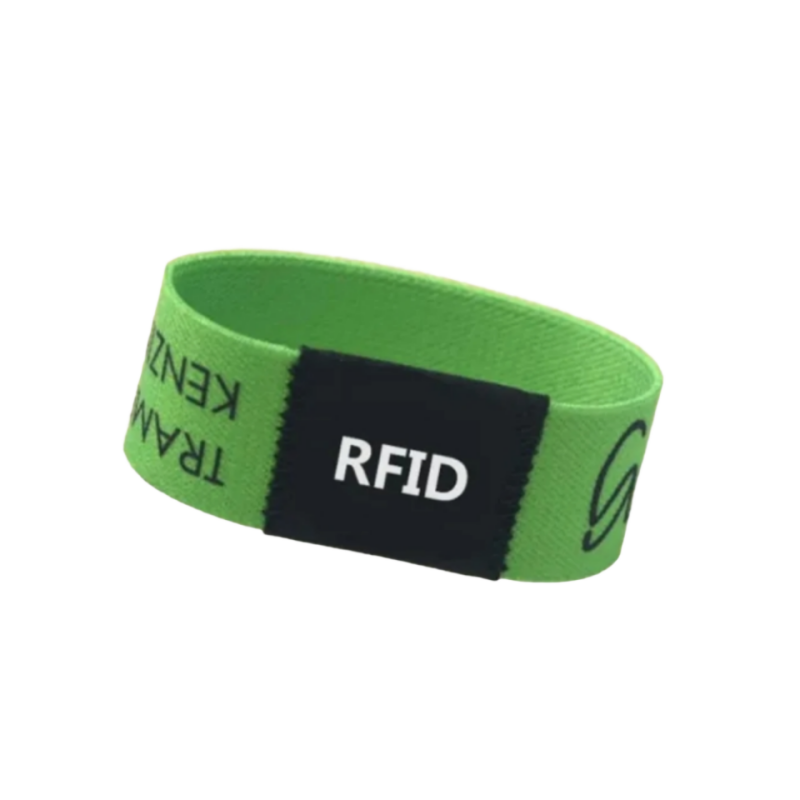
Not all wearables serve the same purpose. Selecting the right materials and microchips determines both the durability of the credential and the reliability of your data.
You must match the physical durability of the band to the length and environment of your event.
| Material Type | Durability | Best Use Case | Key Feature |
|---|---|---|---|
| Woven / Fabric | High | Multi-day music festivals | Secure locking closures prevent removal. |
| Silicone | Very High | Resorts, waterparks, gyms | Reusable and fully waterproof. |
| Tyvek / Vinyl | Medium | Single-day events, conventions | Cost-effective and tamper-evident. |
The microchip dictates how your hardware communicates with the credential. The industry relies on universally accepted ISO standards to ensure hardware compatibility.
HF/NFC (13.56 MHz): High-Frequency chips operate at short ranges of just a few centimeters. They adhere to ISO 14443 standards (like MIFARE and NTAG). They provide high encryption, making them the absolute best choice for secure access and cashless payments.
UHF (860-960 MHz): Ultra-High-Frequency chips scan from several meters away. Industrial sectors rely on tools like a UHF RFID flexible textile laundry tag for tracking massive linen inventories. Event organizers adapt this exact UHF technology for passive crowd tracking. You can trigger personalized greetings when a VIP walks past a hidden sensor without them lifting their arm.
Never underestimate the marketing power of a custom wearable. Fully sublimated printing offers incredible sponsor visibility. You can sell logo placements directly on the wristband fabric. Furthermore, beautifully designed woven bands serve as collectible keepsakes. Attendees often wear them for months after the festival ends, providing free organic marketing.
Deploying event technology introduces unique physical and digital risks. A flawless entry experience requires rigorous backup planning and an airtight fulfillment strategy.
Every event organizer dreads the "Wi-Fi goes down" scenario. Heavy crowds inevitably jam local cell towers and strain venue networks. Your chosen POS and access software must possess an encrypted "offline mode". When offline, the system behaves like a localized smart membership card. It stores transaction data directly on the hardware. Once the connection restores, the scanners sync all localized data back to the central cloud server automatically. Gates and bars never stop operating.
How you distribute the wristbands dictates your day-of-event box office lines.
Advance Shipping: Mailing wristbands shifts the activation friction to the attendee's home. They link their ticket profile and credit card from their couch. This drastically reduces day-of-event box office queues.
On-Site Pairing: You hand out blank credentials at the gate. This requires dedicated hardware stations and highly trained staff to pair the blank chip to a digital ticket profile in real-time. It saves shipping costs but increases entry time.
Technology only performs as well as the staff operating it. You must train security and vendors on the specific hardware. Handheld scanners require a different scanning motion than static pedestal readers. Poorly trained staff will hold the scanner too far away, causing false read errors and backing up the lines.
Failing to test scanner batteries under full screen-brightness conditions.
Skipping stress tests on the local Wi-Fi network before gates open.
Forgetting to set up a dedicated troubleshooting tent away from the main entry gates.
Choosing the right technology vendor determines the success of your entire deployment. You are hiring an infrastructure partner, not just a wristband printer.
Does the vendor force you into their proprietary ticketing system? Avoid this trap. Look for partners who offer robust APIs. They should integrate seamlessly with your existing platforms, such as Eventbrite or Front Gate Tickets. This ensures your marketing team does not have to learn entirely new ticketing software.
Assess whether the partner provides scalable hardware rentals. Purchasing hundreds of scanners makes little sense for an annual event. A strong vendor leases handheld scanners, top-up stations, and POS terminals. More importantly, they provide day-of-event technical support teams to manage the hardware on-site.
Asset control systems use an RFID tag for library book management to retain complete item history securely. Similarly, you must demand full ownership of your event's attendee purchase data. Ensure your organization retains all first-party analytics post-event. Do not allow the vendor to gatekeep your audience's email addresses or spending habits. Some partners also offer premium credential options, such as an RFID NFC black card for exclusive VIP access, giving you granular data on your highest-spending demographics.
RFID wristbands are not just simple entry tokens. They act as comprehensive event management tools that secure physical perimeters and maximize venue revenue. By eliminating cash handling and visual ticket checks, you fundamentally upgrade the attendee experience. Lines disappear, security tightens, and per-capita spending increases.
Start your vendor evaluation by mapping your specific venue bottlenecks. Determine if your highest priority is stopping counterfeiters or speeding up the bar lines. Always prioritize offline-capable software infrastructure to protect against inevitable network drops.
Take action today by requesting sample packs from vendors to evaluate material quality firsthand. Schedule a software demo with an integrations specialist to ensure their API connects smoothly with your current ticketing platform.
A: Costs vary based on volume, chip type, and material. Basic Tyvek bands with simple chips cost a few cents each at high volumes. Premium woven fabric bands with encrypted NFC chips typically range from $0.50 to $1.50 per unit. Custom finishes and locking closures add minor incremental costs.
A: Premium event software features an offline mode. Point-of-sale terminals and gate scanners utilize localized server caching. They store scan data and purchase authorizations locally on the hardware. Once the internet restores, devices automatically sync the data to the cloud. Gates and bars will not halt during an outage.
A: Yes. Unlike standard barcodes, modern high-frequency chips use encrypted Unique Identification (UID) numbers. When configured properly, these microchips cannot be duplicated or cloned by scalpers. The dynamic encryption ensures that even if someone intercepts the signal, they cannot recreate a working credential.
A: Vendors increasingly offer eco-friendly alternatives. You can source bands made from rPET (recycled plastic bottles) rather than virgin polyester. Some manufacturers provide bamboo locking closures instead of plastic teeth. Additionally, silicone bands are entirely reusable, making them perfect for recurring events like season passes.
A: It depends on the material. Woven and Tyvek bands feature single-use, tamper-evident closures. Attendees must cut them off. However, silicone and PVC credentials are fully reusable. You can simply clear the attendee data from the software and reassign the same chip to a new user for the next event.


