

Views: 0 Author: Site Editor Publish Time: 2026-10-28 Origin: Site
Selecting the right RFID inlay is an important decision for companies developing RFID labels, smart cards, packaging solutions, and tracking systems. Although RFID Dry Inlay and RFID Wet Inlay contain the same basic RFID components, their structures are designed for different production methods and application requirements.
Understanding the difference between these two inlay types allows businesses to improve manufacturing efficiency, control production costs, and achieve better RFID performance. As a professional RFID solution provider, JH Card provides customized RFID inlays, RFID tags, and smart card solutions for customers worldwide.
An RFID inlay is the core component that enables an RFID tag to communicate with an RFID reader. It is the internal electronic structure that provides identification and data transmission capabilities before the product becomes a finished RFID label, card, or tag.
A typical RFID inlay contains an RFID chip, antenna, and substrate. The chip stores information, while the antenna allows the inlay to exchange signals with RFID readers. The substrate supports these components and maintains the stability of the overall structure.
Although an RFID inlay is usually hidden inside a finished product, its design has a direct impact on the final performance of the RFID solution. Factors such as reading distance, operating frequency, product size, and application environment are closely related to the inlay design.
For example, companies producing RFID cards may require an inlay that can be integrated into plastic card layers, while logistics companies may need a UHF RFID Inlay designed for long-distance inventory tracking.
For businesses looking for different inlay configurations, RFID Dry and Wet Inlays provide flexible options for different RFID applications.
An RFID inlay is usually an intermediate product rather than the final solution used by customers. It needs to be integrated into different materials or converted into finished RFID products depending on the application.
The manufacturing process usually follows this path:
RFID Inlay → Product Conversion → Printing and Customization → Encoding → Finished RFID Product
For RFID card manufacturers, the inlay is embedded between card layers during production. For RFID label converters, the inlay may be combined with adhesive materials and printable surfaces to create finished RFID labels.
The relationship between an inlay and the final RFID product can be understood as follows:
Product Stage | Description |
RFID Inlay | The electronic core containing the chip and antenna |
RFID Label | An inlay combined with adhesive material and printable layers |
RFID Card | An inlay embedded inside card materials |
RFID Tag | A finished RFID product designed for a specific application |
This is why selecting the correct RFID inlay is an important step before mass production.
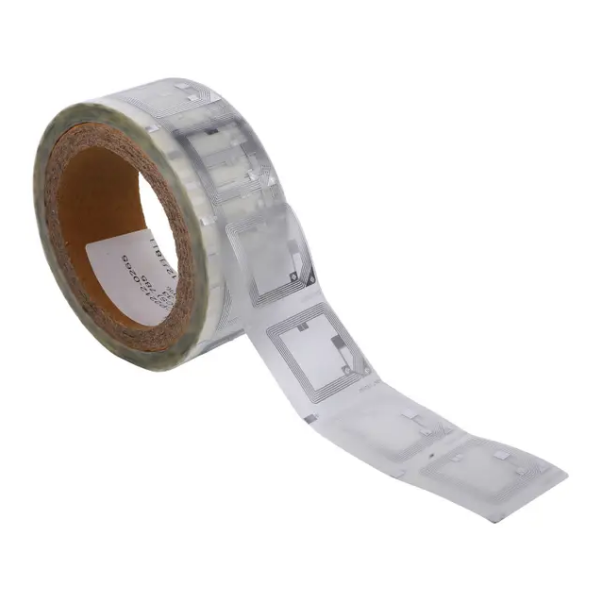
An RFID Dry Inlay is an RFID inlay without an adhesive layer. It consists mainly of the RFID chip, antenna, and substrate, making it suitable for manufacturers that need to integrate RFID technology into their own products.
The biggest advantage of RFID Dry Inlay is manufacturing flexibility. Since there is no adhesive backing, companies can customize the final product structure according to their production requirements.
For example, smart card manufacturers commonly use dry inlays because they can be placed between card layers during lamination. This allows companies to produce hotel key cards, access control cards, employee identification cards, and other customized RFID cards.
Dry inlays are also widely used in embedded RFID applications. When a company wants the RFID component to become part of the product itself rather than a separate sticker, dry inlays provide a more suitable solution.
Another important reason manufacturers choose RFID Dry Inlays is cost efficiency. Since they do not include adhesive materials or release liners, they generally have a simpler structure, which can reduce material costs in large-volume production.
For example, compact RFID solutions such as Round HF NTAG213 RFID Tag Sticker Dry Inlay can be integrated into various identification products where size and flexibility are important considerations.
An RFID Wet Inlay is an RFID inlay with an adhesive layer and release liner, allowing it to be directly attached to products or surfaces. Because of this structure, wet inlays are often considered closer to finished RFID labels.
The main advantage of RFID Wet Inlay is convenience. Users can remove the release liner and attach the RFID label directly without additional manufacturing processes.
This makes wet inlays popular in applications where companies need fast deployment, including warehouse inventory management, logistics tracking, retail identification, and asset management.
For example, a distribution center managing thousands of products can quickly attach RFID wet inlays to packages, shelves, or containers. This improves operational efficiency because employees do not need additional equipment to install the RFID labels.
However, wet inlays include additional adhesive materials, which means the production cost is usually higher compared with dry inlays. Therefore, companies should consider whether they need direct application convenience or manufacturing flexibility before making a decision.
The main difference between RFID Dry Inlay and RFID Wet Inlay is not the RFID communication technology itself, but how the inlay is integrated into the final product.
Comparison Factor | RFID Dry Inlay | RFID Wet Inlay |
Adhesive Layer | Not included | Included |
Installation Method | Integrated during manufacturing | Direct attachment |
Production Flexibility | Higher | Moderate |
Material Cost | Lower | Higher |
Main Users | Manufacturers and converters | End users and label applications |
Common Applications | RFID cards, embedded products, packaging | RFID labels, logistics tracking |
RFID Dry Inlays are usually the preferred option for companies that manufacture customized RFID products.
For smart card manufacturers, dry inlays provide better control over product design because the RFID component can be embedded inside the card structure. This allows manufacturers to maintain the appearance and durability of the final product while adding RFID functionality.
Packaging companies may also choose dry inlays when developing smart packaging solutions. Since the RFID component can be integrated into the product structure, brands can maintain a cleaner appearance and avoid visible external labels.
RFID Dry Inlays are especially suitable when companies require:
· Customized product development
· Large-scale manufacturing
· Integration with existing production lines
· Greater control over product design
RFID Wet Inlays are more suitable when the priority is fast application rather than product integration.
The adhesive backing allows companies to quickly apply RFID labels to products, containers, and equipment. This makes wet inlays particularly useful for industries that need rapid deployment of RFID tracking systems.
Common examples include warehouse inventory, retail product identification, logistics management, and asset tracking.
For businesses that do not manufacture RFID products themselves, wet inlays provide a convenient way to introduce RFID technology without changing existing production processes.
RFID Dry Inlays are widely used in smart card manufacturing because they can be embedded inside card materials during production.
Common applications include hotel key cards, employee ID cards, membership cards, and access control systems.
The RFID inlay provides the communication function while remaining protected inside the card structure. This improves product durability and ensures stable performance during daily use.
Retail and packaging industries are increasingly adopting RFID technology to improve inventory visibility and supply chain efficiency.
RFID inlays allow companies to identify products automatically, reduce manual counting work, and improve inventory accuracy.
Dry inlays are often selected for embedded packaging projects, while wet inlays are commonly used when products need a ready-to-apply RFID label.
RFID technology has become an important tool for logistics and industrial management because it enables faster identification and real-time inventory visibility.
Wet RFID inlays are commonly used for shipment identification, warehouse management, and product tracking.
For large-scale operations, selecting a suitable RFID inlay can improve reading reliability and reduce operational costs.
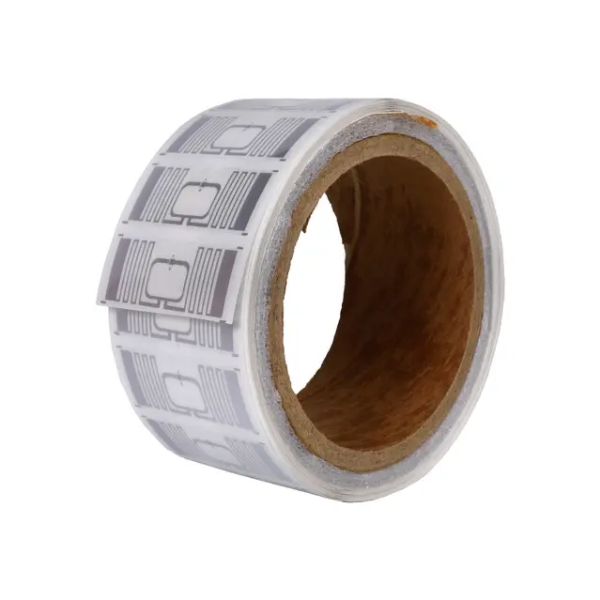
The choice of RFID frequency directly affects how the final product performs.
HF and NFC solutions are commonly used for short-range applications such as access control, smart interactions, and authentication. UHF RFID Inlays are usually selected for logistics and inventory applications because they provide longer reading distances and support bulk identification.
Businesses should select chip types according to their application goals rather than choosing based only on product price.
Antenna design plays an important role in RFID performance. The size, shape, and material environment of the final product can influence reading distance and reliability.
A professional RFID Inlay Manufacturer can help customers select suitable antenna designs and optimize performance before mass production.
Choosing the right supplier is as important as choosing the right product.
A reliable RFID Inlay Manufacturer should be able to provide customized options, stable production quality, suitable chip recommendations, and technical support throughout the development process.
For businesses developing new RFID products, cooperation with an experienced manufacturer can reduce testing time and avoid problems during large-scale production.
RFID Dry Inlay and RFID Wet Inlay serve different purposes in RFID product development. Dry inlays provide greater flexibility for manufacturers that need customized integration, while wet inlays offer a convenient solution for direct application and fast deployment.
The right choice depends on production methods, application environment, performance requirements, and long-term business goals.
With professional RFID manufacturing experience, JH Card provides customized RFID Dry Inlay, Wet Inlay, and RFID tag solutions for global customers. Contact JH Card today to discuss your RFID requirements and develop the right solution for your application.
The main difference is that RFID Wet Inlay includes an adhesive layer, while RFID Dry Inlay does not. Dry inlays are mainly used for manufacturing integration, while wet inlays are easier for direct application.
RFID Dry Inlay is usually the better choice for RFID card production because it can be embedded between card layers during manufacturing.
Yes. UHF RFID Inlays are commonly used for logistics and warehouse applications because they support longer reading distances and efficient bulk identification.
A reliable RFID Inlay Manufacturer should provide customized solutions, stable quality control, suitable chip options, and professional support for testing and production.


