

Views: 0 Author: Site Editor Publish Time: 2026-03-09 Origin: Site
Buyers often see terms like “programmable,” “writable,” “rewritable,” or even “UID changeable” in listings for a Programmable NFC Access Control Keyfob. These terms sound similar, but they do not always mean the same thing. In access control projects, that difference matters because misunderstandings can lead to wrong purchasing decisions, failed tests, or delays during credential setup. In general, NFC is a short-range wireless technology within the RFID family, commonly used for close tap interactions. However, when a keyfob is labeled “rewritable,” buyers should not assume every data element can be changed. In many standard NFC chip designs, some areas are intended for user data, while identity-related fields may be factory-set or restricted, and writable behavior can also depend on chip structure and lock settings. This article explains what “rewritable” usually means for a Programmable NFC Access Control Keyfob, what data may actually be changed, and why compatibility and testing matter more than marketing labels.
In online listings, “programmable,” “writable,” and “rewritable” are sometimes used loosely. Some sellers use them to describe user-memory writing, while others use them as general marketing terms. For buyers, this creates confusion because the wording may not explain:
which memory area is writable
whether writing is one-time or repeatable
whether lock settings are involved
whether UID or serial data is changeable
For an access control project, these distinctions are not small details. They directly affect whether the keyfob can be deployed as expected.
A Programmable NFC Access Control Keyfob may be purchased for different reasons:
pre-encoding before delivery
replacing lost credentials
testing access workflows
combining access with additional NFC data (where supported)
If the buyer assumes “rewritable” means “everything can be changed,” the project may run into problems. A keyfob can be rewritable in one area but still not support the exact access credential behavior the buyer expects.
“Rewritable” describes a capability range, not unlimited control. It does not automatically mean:
universal reader compatibility
editable UID on standard chips
support for encrypted systems
unrestricted data copying from existing credentials
That is why the safest approach is to ask what exactly is rewritable, not just whether the keyfob is “programmable.”
A key concept for buyers is that NFC chip memory is not one single space with equal permissions. A Programmable NFC Access Control Keyfob may include different areas for:
user data storage
configuration or control data
lock-related settings
chip identity / serial information
These areas can have different write rules. In many common NFC tag chips, user memory is designed to be written (and often rewritten) within supported workflows, while identity-related fields are not treated the same way.
In many NFC scenarios, rewritable behavior usually refers to user memory used for data such as:
text records
URLs
app-related payloads
project-specific encoded values (where supported)
This is one reason the term “programmable NFC” is widely used. But even here, rewritability may depend on whether the memory has been locked, how the chip is configured, and what the software workflow allows.
Some NFC chip families support lock mechanisms that can make parts of memory read-only after writing. NXP’s NTAG documentation explicitly describes static and dynamic lock bytes for user memory areas, which is a reminder that “rewritable” can change after configuration.
This means a keyfob may be rewritable at one stage of deployment, then intentionally locked later for stability or security reasons. Buyers should confirm whether this is part of the intended workflow.
A Programmable NFC Access Control Keyfob can be truly programmable within its supported scope and still have strict limits. The key is to define the scope clearly:
what data can be written
how many times it can be rewritten
whether locking is permanent
who performs the writing (buyer or manufacturer)
Without this clarity, “programmable” becomes too vague to support real project decisions.
In many standard NFC tag-based keyfobs, the most commonly changeable area is user memory. This is where supported NDEF or other application data may be stored. Android’s NFC documentation also centers common NFC use on reading and writing small payloads of data, which aligns with this user-memory concept.
For buyers, this is usually the safest interpretation of “rewritable” unless the seller clearly states more.
Some projects use a Programmable NFC Access Control Keyfob for access-related data encoding. Whether this can be changed depends on:
chip family
reader/system requirements
encoding method
permissions and software workflow
security design
So the answer is not simply “yes” or “no.” It depends on the actual access control ecosystem.
Some chip settings may be writable under specific conditions, but they are often more restricted than normal user memory. Buyers should treat these as chip-specific features, not standard assumptions. This is especially important if the project involves write protection or lifecycle control.
One of the biggest misunderstandings is around UID (serial number) rewritability. In many standard NFC chips, the UID is factory-set and not intended to be rewritten. References discussing “magic cards/tags” exist precisely because they are special cases and not the default behavior.
If a seller claims UID can be changed, buyers should ask whether the product is a special UID-changeable variant and request clear confirmation.
There are special products in the market often referred to as “UID-changeable” or “magic” tags/cards. These should not be confused with standard NFC keyfobs. If your project depends on UID behavior, the product type must be explicitly identified and tested before any bulk order.
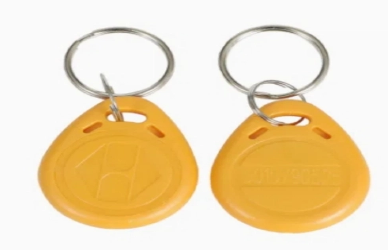
A Programmable NFC Access Control Keyfob may be rewritable and still fail in your access control system. That is because compatibility depends on more than write capability. The keyfob must match the reader and system requirements.
Even within NFC/RFID products, compatibility may depend on:
frequency category
protocol expectations
chip type/family
reader configuration
system security model
In short, “rewritable” is not a compatibility guarantee.
If an access control system uses encrypted or proprietary credential logic, a generic programmable keyfob may not support the required behavior. Replacing a lost credential may involve system enrollment rules, not just data rewriting.
In many projects, credential replacement requires:
system authorization
enrollment workflow
correct credential format
reader recognition validation
That is why buyers should avoid framing the question as “Can I rewrite it?” and instead ask “Will it work in my system after writing?”
Before ordering, ask the supplier to define:
user memory rewritable?
configuration fields rewritable?
lock behavior?
UID rewritable or fixed?
pre-encoding support only, or open writing workflow?
This single step prevents most misunderstandings.
Ask for the chip type/family and a clear description of supported programming scope. If the supplier cannot explain what “programmable” covers, the risk is high.
A useful sample test should include:
initial read check
write test
rewrite test
lock behavior test (if relevant)
access system recognition test
This turns marketing claims into verifiable results.
If the project may lock data after writing, confirm whether the lock is permanent and how it affects later updates. This matters for maintenance and credential lifecycle planning.
Yes, in many chip types some memory areas can be locked after programming, and lock behavior may be permanent depending on the chip and settings. Buyers should confirm this before deployment.
Not necessarily. On many standard NFC chips, the UID is factory-set and not rewritable. UID-changeable products are usually special variants and should be explicitly identified.
It depends on the chip type, the memory area being rewritten, and whether lock settings have already been applied. Repeated read/write testing should be part of sample validation before bulk approval.
Ask exactly which data area is rewritable (user memory, configuration fields, UID, or pre-encoding only), and require a sample test process that proves it on your intended system.
For a Programmable NFC Access Control Keyfob, “rewritable” usually means that specific data areas—most commonly user memory—can be written or rewritten under supported conditions, not that every part of the keyfob can be changed. In many standard NFC chip designs, identity-related fields such as UID are typically factory-set, while lock settings and chip-specific rules can further limit later rewrites. The safest purchasing approach is to define the rewritable scope clearly, confirm chip and lock behavior, and test samples on the real access control system before mass production.


