

Views: 0 Author: Site Editor Publish Time: 2026-11-02 Origin: Site
Tracking industrial assets is becoming increasingly important for manufacturers, warehouses, and equipment management companies. However, when RFID tags are attached directly to metal surfaces, traditional RFID solutions often experience performance problems because metal can interfere with signal transmission and reduce reading reliability.
Selecting the right RFID Anti-Metal Tags allows businesses to achieve stable identification performance even in challenging industrial environments. As an experienced RFID solution provider, JH Card provides customized RFID tags and asset tracking solutions designed for different industries and application requirements.
Standard RFID tags are designed based on the interaction between the tag antenna and the RFID reader. When a normal RFID tag is placed directly on a metal surface, the metal changes the surrounding electromagnetic environment and affects the way signals are transmitted.
One common issue is signal reflection. Metal surfaces can reflect RFID signals, creating interference between the original signal and reflected signals. This may result in unstable communication between the tag and reader.
Another challenge is antenna detuning. The antenna inside an RFID tag is designed to operate at a specific frequency. When the tag is attached to metal, the electrical characteristics around the antenna change, which can reduce the antenna’s efficiency and shorten the reading distance.
These problems are especially serious in industrial environments where companies need to identify metal equipment, machinery, tools, containers, and other valuable assets. In such applications, standard RFID labels may not provide the reliability required for long-term tracking.
RFID Anti-Metal Tags are specifically designed to overcome these limitations by using special structures that separate the antenna from the metal surface and maintain stable RFID communication.
Choosing an unsuitable RFID tag for metal assets can create problems throughout an asset tracking system. A tag that performs well during initial testing may fail after installation if the actual working environment is not considered carefully.
Problem | Impact |
Unstable tag reading | Incomplete or inaccurate asset records |
Reduced reading distance | Lower efficiency during inventory checking |
Incorrect tag selection | Additional replacement and deployment costs |
For industrial companies, the cost of replacing unsuitable tags can be much higher than selecting the correct solution at the beginning of a project. Therefore, testing RFID performance under real application conditions is an important step before large-scale deployment.
An RFID Anti-Metal Tag is designed specifically for applications where the tag needs to work on metal surfaces. Unlike standard RFID tags, anti-metal tags include additional structures that reduce the negative influence of metal on RFID performance.
The internal design usually includes an RFID chip, antenna, isolation layer, and protective material.
The isolation layer plays a critical role because it creates separation between the antenna and the metal surface. This allows the antenna to maintain better performance and improves communication stability.
The outer protection design depends on the application environment. Some industrial applications require flexible tags that can be attached to equipment surfaces, while others need rugged housings that can withstand impact, moisture, and outdoor conditions.
For businesses looking for different industrial RFID solutions, RFID Anti-Metal Tags provide various options for asset tracking applications involving metal surfaces.
Different assets require different tag designs. The correct choice depends on the size of the asset, installation environment, required reading distance, and expected service life.
Type | Typical Applications |
Flexible RFID Metal Label | IT equipment, tools, shelves, small metal assets |
ABS RFID Tag | Outdoor equipment, industrial assets, machinery |
PCB RFID Tag | Heavy equipment and demanding industrial environments |
Flexible RFID metal labels are suitable when companies need a thinner solution that can be attached to relatively smooth metal surfaces. They are often used for IT asset management, tool identification, and equipment tracking.
ABS RFID tags provide stronger physical protection and are commonly used in outdoor or industrial environments where the tag may experience vibration, impact, water exposure, or dust.
PCB RFID tags are designed for applications that require higher durability and long-term stability, such as machinery tracking and industrial equipment management.
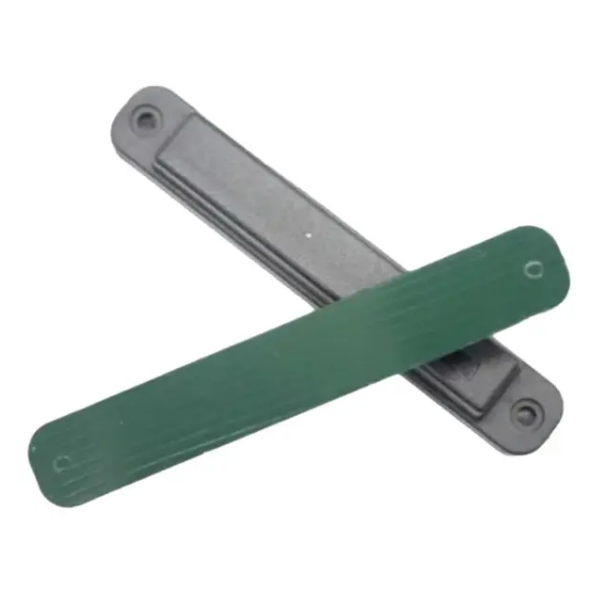
Reading distance is one of the first factors businesses should evaluate when selecting RFID Anti-Metal Tags.
Different applications require different reading ranges. A small workshop managing tools may only require short-distance identification, while a warehouse or manufacturing facility may need longer-range scanning for multiple assets.
The final reading performance depends on several factors, including RFID frequency, chip selection, antenna design, reader performance, and installation environment.
For example, UHF RFID solutions are commonly selected for industrial asset tracking because they support longer reading distances and faster identification of multiple items.
Before purchasing RFID Metal Tags, companies should define how the tags will be read in daily operations rather than selecting products only according to specifications.
Industrial environments are often much more demanding than commercial applications. RFID tags used in factories, warehouses, and outdoor facilities need to maintain performance under different environmental conditions.
Important factors include temperature changes, moisture, dust, chemical exposure, and physical impact.
For example, an RFID tag attached to manufacturing equipment may need to withstand vibration and high temperatures, while a tag used for outdoor equipment may require waterproof and weather-resistant protection.
Selecting the correct housing material and protection level helps ensure that RFID Asset Tracking systems remain reliable over long periods.
The installation method directly affects the durability and usability of an RFID tracking system.
Different projects may require different mounting options. Adhesive mounting is convenient for applications where tags need to be attached quickly, while screws and rivets provide stronger fixation for permanent industrial equipment.
Cable tie installation can be useful for assets with irregular shapes or applications where drilling holes is not suitable.
The best mounting method depends on the asset structure, operating environment, and whether the tag needs to be replaced or removed in the future.
Manufacturing facilities contain large numbers of valuable metal assets, including machines, tools, production equipment, and components.
Traditional manual tracking methods can be time-consuming and may lead to inaccurate records. RFID Anti-Metal Tags allow manufacturers to identify assets automatically and improve visibility throughout the production process.
By attaching RFID tags to equipment and tools, companies can track usage information, improve maintenance management, and reduce the risk of misplaced assets.
Warehouses often contain many metal assets, including storage racks, containers, pallets, and transportation equipment.
RFID Asset Tracking systems help companies improve inventory accuracy by allowing faster identification and monitoring of valuable assets. RFID technology is widely used in logistics because it can identify multiple tagged items efficiently without requiring direct line-of-sight scanning.
Common applications include:
· Returnable transport containers
· Metal storage equipment
· Industrial pallets
· Warehouse tools
With suitable RFID Metal Tags, businesses can reduce manual inventory work and improve operational efficiency.
Automotive and energy industries often involve complex equipment and harsh working conditions. Many components and assets are made from metal, making standard RFID labels unsuitable.
RFID Anti-Metal Tags can be used for tracking:
· Automotive components
· Production tools
· Electrical equipment
· Heavy machinery
In these industries, reliable asset identification helps companies improve maintenance planning, manage equipment history, and increase operational control.
Before selecting an RFID Anti-Metal Tag, companies should evaluate several important factors.
Question | Why It Matters |
What type of metal surface will the tag be attached to? | Different materials may influence RFID performance |
What reading distance is required? | Determines RFID technology and tag design |
What environmental conditions will the tag face? | Determines protection level and material selection |
How will the tag be installed? | Determines suitable mounting structure |
A clear understanding of these requirements helps companies avoid choosing unsuitable products and improves the success rate of RFID deployment.
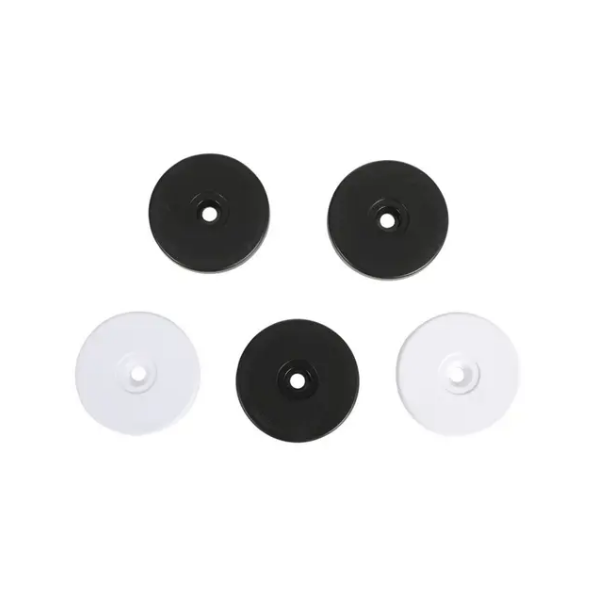
Selecting a suitable RFID manufacturer is an important part of any industrial RFID project.
A professional supplier should not only provide standard RFID products but also help customers select the right tag structure according to their actual application.
Important supplier capabilities include product customization, performance testing, material selection support, and stable mass production.
For example, Anti-Metal Round RFID Patrol Tag demonstrates how anti-metal RFID products can be designed for specific industrial identification scenarios.
Working with an experienced supplier allows companies to test RFID performance before large-scale deployment and reduce risks during implementation.
Choosing the right RFID Anti-Metal Tags is essential for reliable industrial asset tracking. Unlike standard RFID labels, anti-metal solutions are designed to overcome signal interference caused by metal surfaces and provide stable identification performance.
Before selecting a product, businesses should carefully evaluate asset materials, reading distance, environmental conditions, installation methods, and supplier capabilities.
With professional RFID manufacturing experience, JH Card provides customized RFID Anti-Metal Tags, RFID Metal Tags, and Industrial RFID Tags for customers worldwide. Contact JH Card today to discuss your asset tracking requirements and develop a suitable RFID solution.
Standard RFID tags may experience signal interference when attached directly to metal because metal affects antenna performance and changes the RFID signal environment.
RFID Anti-Metal Tags include special structures such as isolation layers that help maintain reliable communication when installed on metal surfaces.
RFID Metal Tags are commonly used in manufacturing equipment tracking, warehouse asset management, automotive parts identification, and outdoor industrial applications.
The right choice depends on the asset material, required reading distance, environmental conditions, installation method, and the specific tracking requirements of the project.


