

Views: 0 Author: Site Editor Publish Time: 2026-05-30 Origin: Site
Warehouses today face unprecedented pressure to move goods faster and more accurately. Manual barcode scanning simply cannot keep up. Automated RFID tracking promises profound efficiency gains for your facility. However, deploying the wrong hardware configuration creates massive operational bottlenecks. It also inflates long-term budget expenses unnecessarily. Warehouse operators must constantly balance a tricky dilemma. You want 100% hands-free automation. Yet, you also need agile, exception-handling field mobility.
We move beyond basic hardware comparisons in this guide. We evaluate Fixed and Handheld RFID Readers based on throughput physics. We also examine IT ecosystem readiness and complex deployment environments. By the end, you will understand how to build a robust, hybrid infrastructure. You will optimize your long-term ROI without overspending on redundant hardware.
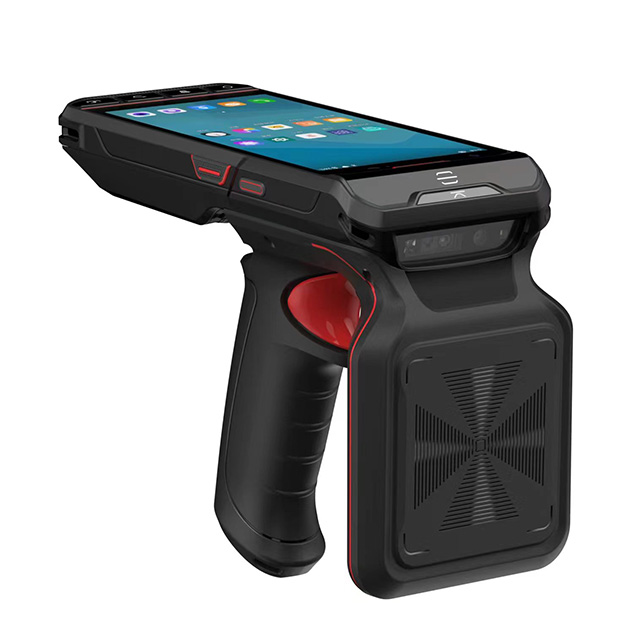
Performance Gap: Fixed readers process up to 1,300 tags per second with a 20–100 ft range; handhelds peak at 10–50 tags per second within a <10 ft range.
Hidden Costs: Handhelds offer low initial CapEx but incur continuous labor costs; fixed systems require significant upfront engineering but reduce the marginal "cost-per-scan" to near zero.
Ecosystem Over Hardware: Successful deployment relies as much on middleware, PoE (Power over Ethernet), and network security as it does on antenna hardware.
The Hybrid Standard: Modern enterprise warehouses rarely choose just one; a hybrid approach blending chokepoint automation with mobile exception handling is the industry standard.
Let us talk about read range and coverage grids. Fixed systems use tunable, multi-antenna arrays. You can configure them using 1 to 16 or more individual ports. They easily blanket wide zones measuring 20 to 100 feet. This setup provides continuous, automated monitoring. Handhelds operate entirely differently. They rely strictly on internal battery power output. This constraint limits reliable scanning to localized zones under 10 feet. It also requires the operator to physically walk toward the asset.
Capability | Fixed RFID Readers | Handheld RFID Scanners |
|---|---|---|
Read Range | 20–100 ft | < 10 ft |
Throughput | Up to 1,300 tags/sec | 10–50 tags/sec |
Antenna Ports | 1 to 16+ (Scalable) | Internal (1) |
Power Source | PoE or AC Wall Outlet | Rechargeable Battery |
Best Practices for Antenna Selection:
Maintain clear lines of sight where possible, even though RFID penetrates materials.
Angle fixed antennas slightly downward. This prevents signal bleed into adjacent warehouse aisles.
Test different hardware power levels. Always find the lowest effective setting to prevent interference.
Next, consider antenna polarization realities. You must choose between linear and circular polarization carefully. Linear polarization focuses energy tightly. It travels long distances efficiently. However, it remains highly sensitive to tag orientation. If a tag shifts slightly, a linear antenna might miss it completely. Circular polarization offers wider, overlapping coverage. It tolerates varied tag placements much better. The trade-off is a significantly shorter maximum range.
Throughput and collision mitigation also matter greatly. Warehouses deal constantly with dense tag environments. Imagine pallets carrying hundreds of individual items. Fixed readers utilize enterprise-grade chips. They excel at running complex anti-collision algorithms. You see this clearly in high-throughput conveyor settings. Handhelds lack this massive processing power. Operators must visually pace their manual scanning. Otherwise, they risk creating blind spots.
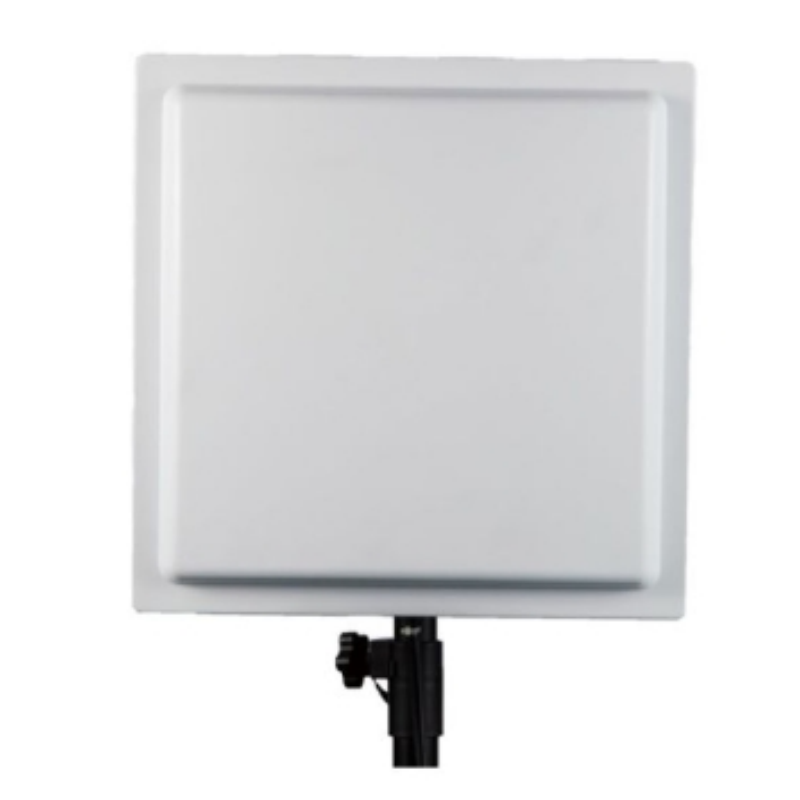
Fixed readers act as permanent automation engines. They deliver immense value in specific strategic use cases. Dock doors rely on them for inbound and outbound verification. They confirm entire truckloads instantly. Conveyor belt chokepoints use them to scan moving inventory automatically. Forklift-mounted setups combine mobility and fixed-reader power. They transform standard vehicles into roaming data collectors.
These systems carry heavy IT and infrastructure demands. You must provide robust edge-computing capabilities. Readers process thousands of data points locally before sending them to the cloud. Power over Ethernet (PoE) infrastructure is essentially mandatory. It provides both power and network connectivity through one cable. You also need specialized physical installation. Engineers must navigate environmental RF interference carefully. Metal racks and liquids easily bounce or absorb radio signals.
Access control represents another major integration point. Fixed readers frequently connect into physical security systems. They track personnel movements effortlessly across the warehouse floor. Warehouses commonly utilize a Polycarbonate smart card or a rugged Polycarbonate ID card for employee badge-ins. Forklift operators can authenticate using a highly durable Polycarbonate Driver License card or a custom-encoded Polycarbonate blank card. This action triggers personalized equipment settings via the fixed reader network.
Be aware of critical implementation risks. Over-extending the read zone causes severe problems. You might experience "misreading." This happens when the reader captures innocent tags from adjacent storage bays. Tuning your equipment properly prevents these costly errors.
Common Mistakes in Fixed Deployments:
Installing antennas flush against metal beams. This requires proper RF shielding first.
Maxing out transmission power unnecessarily. This creates massive ghost read zones.
Ignoring heavy forklift traffic patterns during the physical installation phase.Handheld RFID Scanners: Precision, Agility, and Exception Handling
Handheld scanners offer unmatched precision and agility. They excel during specific operational use cases. Cycle counting becomes significantly faster compared to traditional barcodes. Workers perform localized asset searching easily. They use the intuitive "Geiger Counter" audio-feedback method. The scanner beeps faster as they approach the missing item. Spot-checking misrouted pallets requires exactly this kind of flexible mobility.
Device ergonomics vary wildly across modern configurations. Sled-style attachments represent one popular option. They leverage consumer smartphones via Bluetooth connections. This reduces upfront hardware costs. Industrial all-in-one PDA models offer a more robust alternative. These feature rugged form factors and integrated touchscreen interfaces. They survive heavy daily use much better.
Consider the operational vulnerabilities of mobile devices carefully. They rely entirely on human compliance. The hardware costs less upfront. However, labor dependency introduces ongoing accuracy risks. Missed scans persist if workers ignore standard operating procedures (SOPs). They might sweep the scanner too quickly. They might skip difficult-to-reach top-tier aisles.
Environmental durability remains a crucial buying factor. Warehouses present harsh, unforgiving physical conditions. Devices must meet minimal IP54 to IP67 standards. These ratings guarantee drop resistance against concrete floors. They also prevent dangerous dust and water ingress.
Best Practices for Handheld Deployments:
Implement strict battery management policies. This ensures full-shift uptime.
Train workers thoroughly on proper sweeping motions. This maximizes tag capture rates.
Use wrist straps or lanyards securely. This prevents accidental device drops.
Hardware accomplishes absolutely nothing without proper software integration. Middleware and software architecture sit at the core of your success. Your readers need seamless API or SDK connections. They must feed raw data directly into your WMS or ERP systems. Without middleware, you simply collect useless digital noise.
Data security demands equal attention from your IT team. Mobile units frequently encounter Wi-Fi and 3G blind spots. Massive steel racks often block wireless signals entirely. Scanners must feature reliable offline caching. This prevents catastrophic data loss during connectivity drops. The device stores data locally and syncs automatically upon reconnection.
Network protection protects your broader business infrastructure. Enterprise deployments require robust, secure hardware. Ensure your readers support modern TLS/SSL encryption. This prevents malicious interception of tag data in the air. It also stops sophisticated spoofing attacks against your internal network.
Always plan on avoiding vendor lock-in. Evaluate RAIN RFID compliance carefully before buying. Demand strict adherence to the EPCglobal Gen2 standard. This ensures future hardware interchangeability. You can swap equipment brands later without rebuilding your entire digital ecosystem.
Common Mistakes in IT Architecture:
Failing to filter out duplicate tag reads at the edge level.
Relying on consumer-grade Wi-Fi routers in vast industrial environments.
Purchasing proprietary hardware. This traps you in one software ecosystem forever.
Making the right financial choice requires structured thinking. We recommend using a straightforward 3-point decision matrix. This simplifies complex enterprise hardware evaluations.
Automation Requirement: Does your specific workflow require zero human intervention? If yes, choose fixed readers. Does it require guided human verification and judgment? Choose handhelds.
Scale of Density: Are you scanning dense pallets containing 500+ items simultaneously? Fixed systems handle this massive concurrency easily. Are you verifying single cartons manually? Handhelds work best for low-volume checks.
Budget Structure: Are you strictly optimizing for upfront CapEx constraints? Handhelds fit well into tight initial budgets. Are you minimizing long-term OpEx labor costs? Fixed infrastructure wins heavily over time.
The hybrid reality represents the ultimate enterprise goal. Modern warehouses rarely choose just one form factor. They deploy both technologies strategically across different operational zones. They build fixed infrastructure at primary physical chokepoints. Receiving and shipping docks need absolute, continuous automation.
Meanwhile, they equip specific floor managers with handhelds. Workers use them for highly targeted inventory audits. They rewrite damaged tags on the fly. They pinpoint lost inventory using mobile agility. This hybrid blend offers the best operational balance. It maximizes automation while preserving necessary human flexibility.
Choosing the right scanner is rarely a simple binary decision. It is a strategic matching exercise. You must carefully evaluate physical warehouse constraints. You must objectively measure your internal IT readiness. You must assess long-term labor availability and operational demands.
Action-oriented next steps include:
Start with a comprehensive site survey and detailed RF mapping.
Identify high-volume chokepoints where manual barcode scanning constantly fails.
Launch a strictly limited pilot program to prove system stability.
Test one fixed dock door alongside two handheld cycle-counting devices.
Evaluate the integrated data flow before approving a full facility rollout.
A: No. Handhelds peak at around 50 tags/sec due to processing and human-movement limits, whereas enterprise fixed readers handle up to 1,300 tags/sec.
A: Improper RF tuning leading to tag collisions, "ghost reads" from adjacent zones, or interference from metal racking and liquids.
A: Not always. Many modern handhelds can translate tag data locally via pre-installed apps or keyboard-emulation directly into a WMS, whereas fixed readers typically require robust middleware to filter and batch data streams.


