

Views: 0 Author: Site Editor Publish Time: 2026-03-02 Origin: Site
When buyers evaluate a Leather Surface RFID Access Control Card, they often compare it with a standard PVC RFID card before making a final decision. This comparison is not only about RFID function, but also about user experience, brand image, and perceived service level in access control projects. Standard PVC RFID cards are widely used because they are practical, familiar, and suitable for large-scale issuance, while leather surface RFID cards are often chosen for a more premium appearance and tactile feel. However, that added design value may also bring trade-offs in cost, visual consistency control, and sample approval requirements. This article outlines the key advantages and trade-offs of a Leather Surface RFID Access Control Card versus a standard PVC RFID card, with a focus on procurement priorities such as appearance, usability, manufacturing consistency, and project fit.
A standard PVC RFID card is commonly used in access control systems because it is simple, familiar, and efficient for large-volume production. It is often chosen when the project priority is functionality, cost control, and broad deployment.
For many organizations, standard PVC cards remain the default choice because they are easy to issue, easy to replace, and suitable for everyday use.
A Leather Surface RFID Access Control Card typically combines an RFID functional core (chip + antenna structure) with an outer decorative layer designed to improve appearance and tactile quality. The leather surface may be selected to create a premium visual identity or more differentiated user experience.
This means the main change is usually in the card’s finish and positioning, not in the basic purpose of access control.
When comparing these two card types, it is helpful to separate function from presentation:
What stays the same: RFID access control purpose, need for system compatibility, need for stable read performance
What changes: surface finish, tactile feel, design impression, perceived value, and often the production/approval complexity
That distinction helps buyers make more practical decisions.
One of the biggest advantages of a Leather Surface RFID Access Control Card is its premium look and hand feel. Compared with a standard PVC card, it can create a more refined impression that supports upscale brand positioning.
This can be valuable in customer-facing environments where presentation matters and where the card itself contributes to the user’s perception of quality.
Standard PVC cards are common and effective, but they may look similar across many industries. A leather surface card provides stronger visual differentiation, which can help a brand stand out in membership, hospitality, or VIP access applications.
For projects that want a unique identity rather than a standard credential appearance, this can be a meaningful advantage.
Leather-surface designs can offer more visual and tactile expression through texture, finish style, and decorative treatment. This gives buyers more flexibility when aligning the card with brand tone, interior design style, or service positioning.
In practical terms, the card may feel less like a generic access card and more like a curated brand item.
In some use cases, the perceived value of the card matters. A premium-feeling card can support a stronger overall user experience, especially where membership tiers, VIP access, or hospitality branding are part of the business model.
This does not mean every project needs a leather surface card, but in the right context, the perceived value can justify the added effort and cost.
Compared with a standard PVC RFID card, a leather surface card usually involves additional material and finishing considerations. As a result, procurement teams should expect that project cost planning may be more complex.
For large-scale issuance projects where cost efficiency is the top priority, standard PVC may remain the more practical option.
Standard PVC cards are often easier to keep visually consistent across large batches. A Leather Surface RFID Access Control Card may require tighter visual approval standards because surface texture, finish appearance, and edge details can introduce more variation.
This is especially important for branded projects where consistency across all cards is a key requirement.
Some buyers assume a leather-surface card is automatically more durable than PVC, but that is not always true. Durability depends on the complete card construction, bonding quality, surface type, and actual use conditions.
In daily access control use, cards may face friction, bending pressure, moisture exposure, and frequent handling. The better choice depends on the project environment and sample validation—not material assumptions alone.
Because leather-surface cards involve more finish-related variables, buyers often need a stricter sample approval process before mass production. This can include checking:
appearance consistency
edge finishing
bonding quality
tactile feel
read performance consistency
This extra step is useful, but it can also add time and coordination compared with a simpler standard PVC card project.
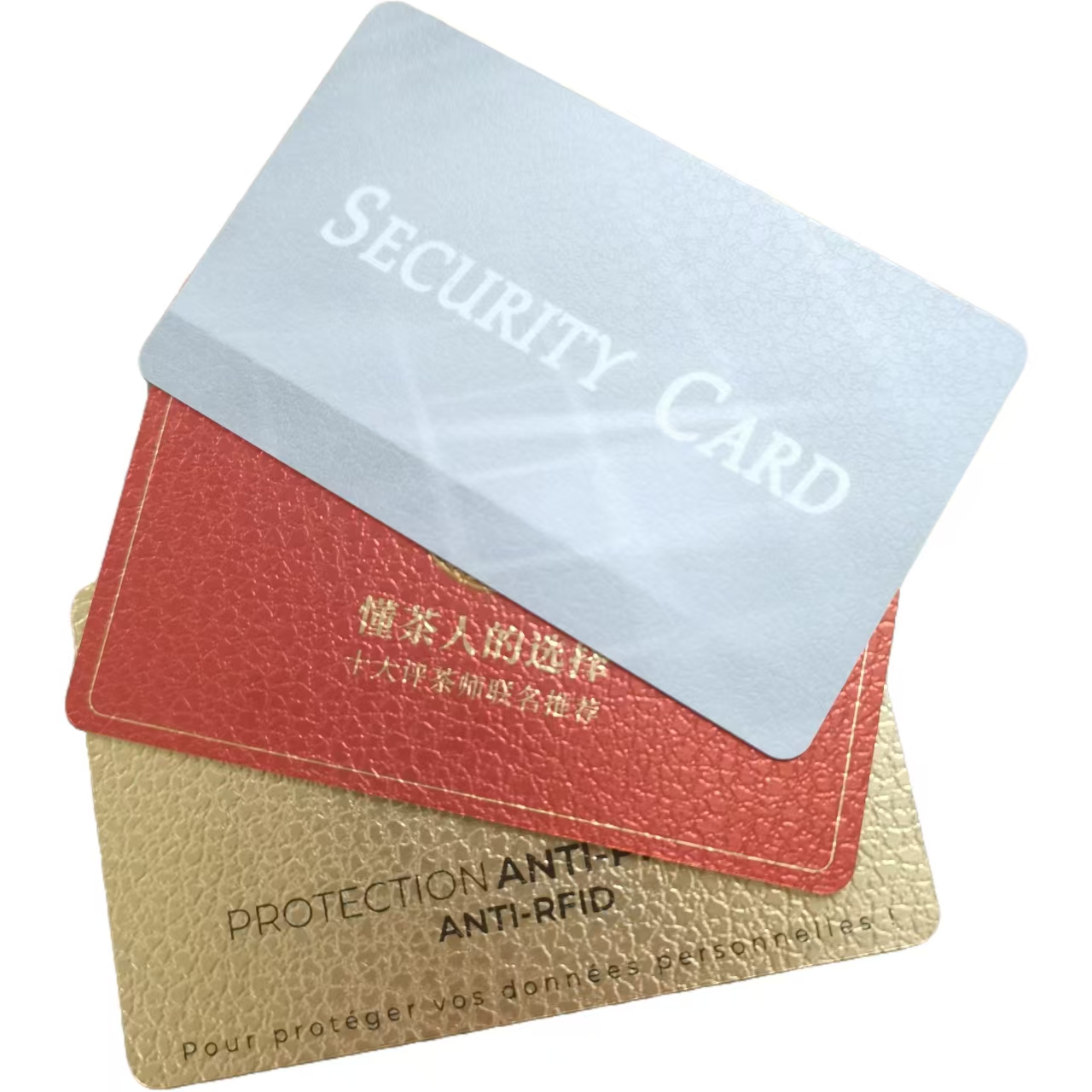
For both card types, RFID performance depends primarily on the internal RFID design and system compatibility, including chip selection, antenna design, card structure, and reader setup. Surface appearance alone is usually not the main factor in read capability.
That is why buyers should avoid assuming that a leather surface card is inherently better or worse in RFID performance than a PVC card.
In many access control applications, the surface material has limited direct impact on practical RFID read behavior when the card is properly designed and manufactured. The key issue is not simply “PVC vs. leather surface,” but whether the complete card structure is suitable for the intended system.
Although the surface layer may not directly determine performance, it can indirectly affect consistency if it changes thickness, lamination stability, or decorative processing outcomes. This is why testing real samples in the actual access control setup is always more reliable than making assumptions based on material type alone.
If the project prioritizes cost efficiency, simple deployment, and large-scale issuance, a standard PVC RFID card is often a practical choice. If the project prioritizes premium presentation, brand differentiation, and tactile experience, a Leather Surface RFID Access Control Card may be the better fit.
The right choice depends on the project goal, not on general assumptions about which card is “better.”
User expectations matter. In a standard office access scenario, a PVC card may be fully appropriate. In a premium membership or hospitality setting, a leather-surface card may better match the expected user experience.
When the card is part of the brand interaction, appearance and feel become more important in the selection process.
Buyers should also think beyond the first order. If the project may require repeat orders, it is important to define clear material, finish, and approval standards early so future batches can remain consistent.
This applies to both PVC and leather-surface cards, but it is especially important for cards with premium finish expectations.
Before mass production, confirm the material and finish expectations clearly in writing. This includes the visual acceptance standard for the project, especially when branding consistency is important.
Confirm that the card type is suitable for the intended access control system and agree on a practical sample testing method. It is better to define how the card will be tested than to rely only on general claims.
Buyers should also confirm expectations for construction consistency and sample-to-batch consistency so the approved sample remains representative of production output.
In many customer-facing projects, it can be a stronger choice for premium presentation because it may offer a more distinctive look and tactile feel. However, the best option still depends on your branding goals, budget, and approval standards.
Standard PVC RFID cards are often easier to control for large-volume visual consistency. Leather-surface cards may require stricter sample approval and clearer finish standards to maintain consistent appearance.
No. Durability depends on the complete card construction, bonding quality, surface type, and actual use conditions. Material category alone does not guarantee better durability.
Buyers should also compare finish quality expectations, sample approval criteria, RFID compatibility validation, and consistency requirements for mass production.
Compared with a standard PVC RFID card, a Leather Surface RFID Access Control Card offers clear advantages in appearance, tactile feel, and brand positioning, which can be valuable in hospitality, membership, and other customer-facing access control applications. At the same time, it may involve trade-offs in cost planning, visual consistency control, and sample approval complexity. The best choice is not universal—it depends on the project’s priorities, user expectations, budget, and the ability to validate both appearance and performance through practical sample testing before mass production.


